Buyer-focused answer
Quick answer for buyers
A practical export packing checklist for EPC buyers planning steel structure component marking, bundling, container loading, and site delivery.
Main question
What should EPC buyers check when using the export packing checklist for steel structure components?
Quick answer
A practical export packing checklist for EPC buyers planning steel structure component marking, bundling, container loading, and site delivery.
When to use this page
Use it before packing is closed, before shipment release, or when the site team needs receiving and handover evidence.
What to verify
Why export packing affects project delivery; Component marking checklist; Bundle planning checklist; Coating protection checklist
Related next step
Why export packing affects project delivery
Steel structure fabrication is only successful when the components arrive at the site in a condition that supports installation. Poor packing can cause coating damage, missing small parts, unclear component identification, slow unloading, and site sorting problems. For EPC projects, these issues can delay erection even when the fabricated steel itself is correct.
Export packing should be discussed before production ends. The supplier, buyer, and site team should agree on marking, bundling, container planning, and document requirements early.
1. Component marking checklist
Every main member and key accessory should be identifiable after transport. Marks should match drawings, packing lists, and erection plans.
- Use component marks that match the fabrication drawings.
- Make labels or painted marks readable after handling and shipping.
- Record marks in the packing list.
- Group small parts with clear tags and quantity labels.
- Use weather-resistant tags when the shipment may be exposed outdoors.
2. Bundle planning checklist
Good bundling reduces unloading time and site sorting work. The supplier should not simply load parts in the order they leave the workshop.
| Bundle method | Best used for | Buyer note |
|---|---|---|
| By building area | Large industrial plants with multiple zones. | Helps site teams unload by area. |
| By component type | Projects with repeated columns, beams, purlins, or bracing. | Simple to inspect, but may require more site sorting. |
| By erection sequence | Projects with strict installation order. | Best for site efficiency, but needs early planning. |
| By container or shipment batch | Multi-shipment export projects. | Useful when site storage space is limited. |
3. Coating protection checklist
Painted or coated steel members can be damaged during lifting, stacking, sea freight, and unloading. Some touch-up may be normal, but avoidable damage should be reduced through packing design.
- Confirm coating system and curing time before packing.
- Use separators or padding where coated surfaces contact each other.
- Avoid sharp edges rubbing against painted surfaces.
- Protect small painted parts from loose movement inside bundles.
- Request loading photos for high-value or corrosion-sensitive components.
4. Small parts and bolt package checklist
Missing bolts, plates, clips, or connection accessories can stop site installation. Small parts need stricter control than large members because they are easier to lose during packing and unloading.
- Pack bolts and small accessories separately by type or installation area.
- Label each package with item name, quantity, and related drawing mark.
- Use strong boxes, bags, or crates suitable for export handling.
- Keep a small-parts packing list separate from the main steel member list.
- Take photos before container loading.
5. Container loading checklist
Container loading should consider dimensions, weight distribution, unloading sequence, and protection. Long steel members and heavy bundles require careful planning.
- Check maximum component length against container or flat rack limits.
- Confirm bundle weight and lifting method.
- Plan safe weight distribution inside the container.
- Separate fragile accessories from heavy members.
- Record container number against the packing list.
- Take loading photos showing bundle condition and final container loading.
6. Export document checklist
Ask for the documents the site and customs teams need before the shipment leaves the factory.
- Commercial invoice and packing list.
- Container loading list.
- Component marking list.
- Material and quality document package, if required.
- Photos of packed bundles and container loading.
- Shipping schedule and vessel information when available.
7. Packing risk table
| Risk | Common cause | Prevention |
|---|---|---|
| Missing small parts | Loose packing or unclear labels. | Use marked packages and a separate small-parts list. |
| Coating damage | Steel-to-steel contact during transport. | Use padding, separators, and proper curing time. |
| Slow site sorting | Bundles not aligned with drawings or erection sequence. | Bundle by area, type, or installation stage. |
| Unloading difficulty | Container loaded without site handling plan. | Confirm lifting method, bundle weight, and unloading sequence. |
Recommended buyer instruction
Before production finishes, send a packing instruction that states marking rules, bundle preference, small-parts packing method, required photos, and document format. This small step can prevent many site problems.
Packing failures, buyer evidence, and shipment release
Why export packing fails
Export packing fails when the supplier focuses on loading containers but not on site identification. A package can leave the factory complete and still create site delays if marks, bundle groups, small parts, or packing photos cannot be matched to the erection sequence.
Packing evidence buyers should request
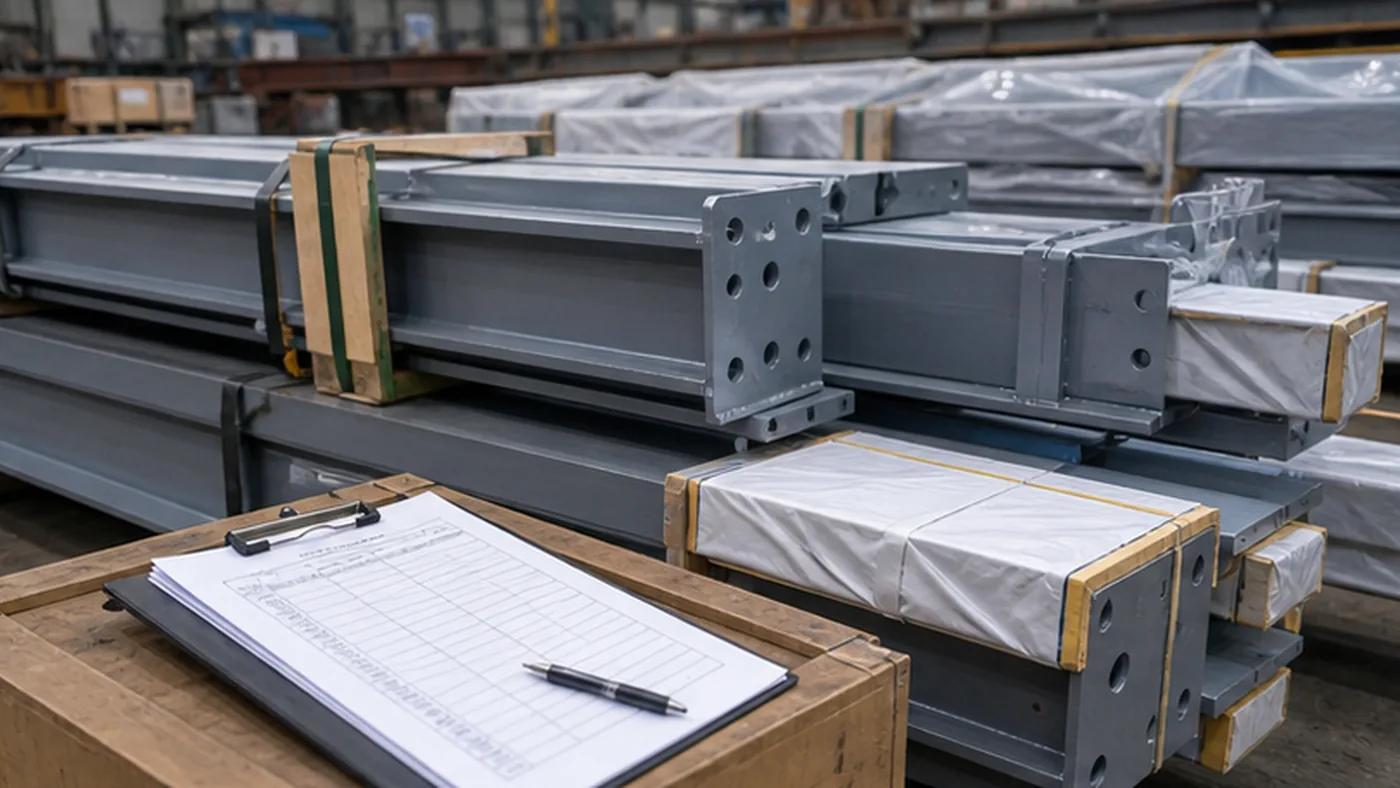
Request photos before loading, during loading, and after loading. Photos should show bundle labels, component marks, bolt box labels, container numbers, seal numbers, and visible protection conditions.
Connection to shipment release
Packing should not be separated from quality release. If component marks, bolt boxes, or packing lists are incomplete, shipment release should remain conditional until the evidence is corrected.
Buyer follow-up questions
How should buyers use this page?
Use it as a practical review aid for export packing checklist for steel structure components. The page helps the buyer confirm what must be checked, what evidence should be requested, and which follow-up actions should be closed before the package moves to the next procurement step.
When should this review happen?
Use it before packing is closed, before shipment release, and when site teams need clear receiving or handover evidence.
What evidence should be kept?
Keep the records that prove the decision, especially component marks, bundle labels, bolt boxes, packing lists, loading photos, shipping documents, receiving records, and closeout notes. Photos, comments, approvals, open issues, and closeout notes should stay linked to the relevant drawing, supplier reply, shipment, or handover record.
How to use this checklist
Check this buyer-side checklist against the contract, approved drawings, owner requirements, engineer instructions, and the current edition of every project-specified standard. See the editorial and source review process.