Buyer-focused answer
Quick answer for buyers
Use this steel structure bolt packing sequence checklist to align bolt boxes, area labels, receiving records, and erection batches before installation starts.
Main question
What should EPC buyers check when using the steel structure bolt packing sequence checklist?
Quick answer
Use this steel structure bolt packing sequence checklist to align bolt boxes, area labels, receiving records, and erection batches before installation starts.
When to use this page
Use it before packing is closed, before shipment release, or when the site team needs receiving and handover evidence.
What to verify
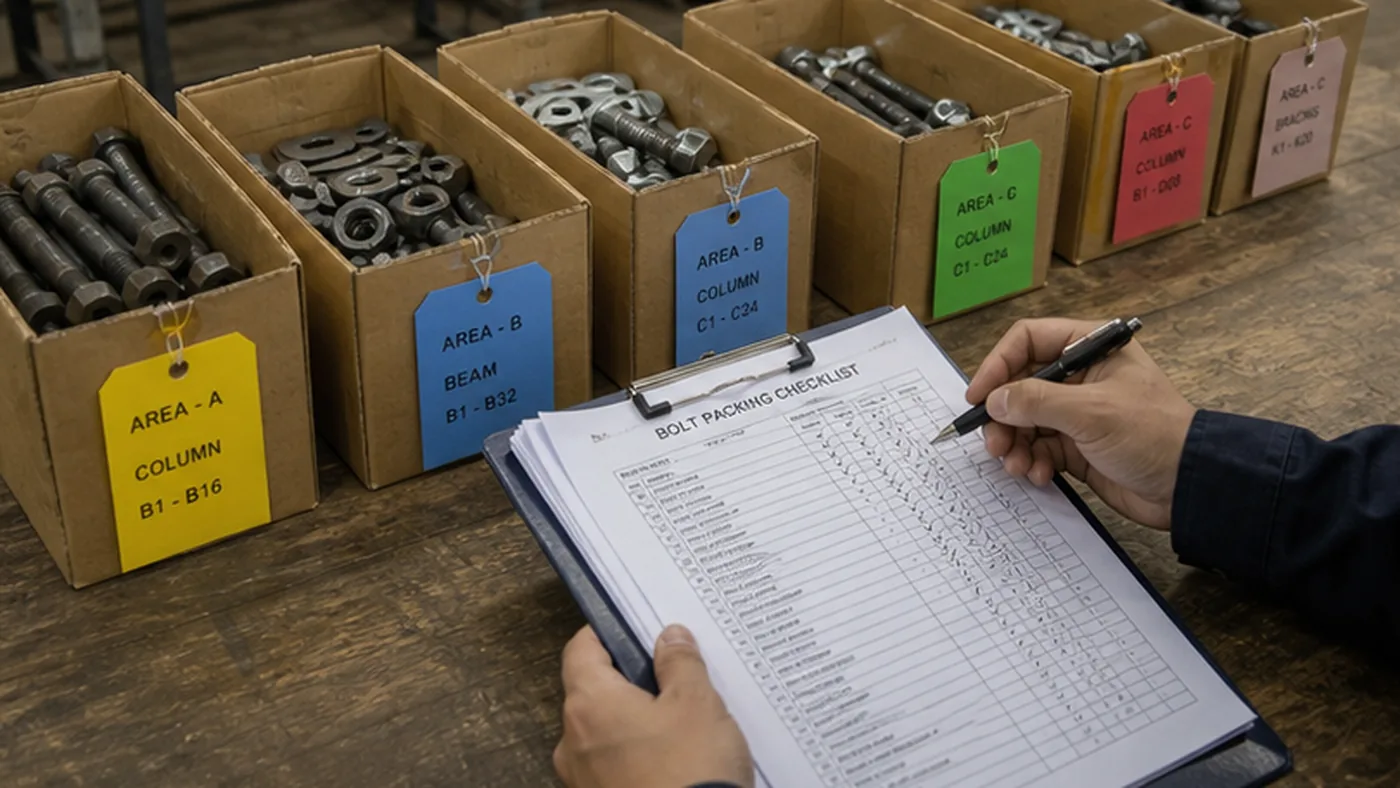
Link bolt packages to erection areas; Prepare a bolt packing matrix; Separate common bolts from critical small parts; Use labels that site teams can read quickly
Related next step
A steel structure bolt packing sequence checklist helps EPC site teams avoid a common delivery problem: primary steel arrives in the correct order, but the bolts and small connection items needed for that erection area are packed in a different box, container, or shipment. This can delay installation even when the steel members themselves are available at site.
This checklist is focused on sequence control. It should be used together with a normal bolt and small-parts packing checklist, but it adds one important question: will the right bolt package be available when the matching steel members are released for erection?
Detailed answer
A steel structure bolt packing sequence checklist should follow the same erection logic used by the EPC site team: area, grid, bay, shipment batch, and release priority. Each bolt box should be tied to related member marks, loading records, and receiving checks so the site can issue the right bolts at the right time without opening every package. Buyers should ask for a bolt packing matrix, readable labels, loading photos, and a shortage reconciliation process before shipment release. This reduces site delay, duplicate shortage claims, and uncontrolled use of spare bolts.
1. Link bolt packages to erection areas
Bolt packing should start from the erection plan, not only from bolt type or total quantity. If the project will be erected by grid, bay, building zone, platform, or shipment batch, bolt boxes should follow the same logic.
| Sequence basis | Buyer check |
|---|---|
| Grid or bay | Confirm whether bolts are grouped for the grid line, bay, or erection area where they will be used. |
| Shipment batch | Check whether bolt boxes are assigned to the same shipment batch as the related members. |
| Member group | Separate anchor bolts, frame bolts, bracing bolts, purlin bolts, stair bolts, and platform accessories. |
| Priority stage | Mark first-erection bolts separately from later-stage or spare bolts. |
2. Prepare a bolt packing matrix
A bolt packing matrix should connect bolt type, package number, quantity, related component marks, and shipment or erection stage. This is more useful than a single total bolt list when the site needs to find small parts quickly.
| Matrix field | What to include |
|---|---|
| Package number | Use a unique box, crate, or pallet number that matches the packing list and label. |
| Bolt description | List diameter, length, grade, coating, nut type, washer type, and special notes. |
| Related members | Show the drawing marks, frame numbers, bay numbers, or component groups supported by the package. |
| Shipment link | State the container, truck, shipment batch, or delivery sequence where the package should travel. |
| Site status | Leave space for received, inspected, issued to erection, short, damaged, or on hold. |
For broader delivery order planning, use the steel structure delivery sequence checklist.
Document control should stay aligned with the physical sequence. Use the steel structure shipping documents checklist for EPC projects when checking whether packing lists, shipment batches, and receiving documents match the same bolt package logic.
3. Separate common bolts from critical small parts
Not all small parts create the same site risk. Standard bolts may be easier to replace, but anchor bolts, high-strength bolts, special washers, turnbuckles, clips, shims, and loose connection plates can stop erection if they are missing or mixed into the wrong package.
- Pack anchor bolts and templates by foundation area or grid line.
- Separate high-strength bolts by grade, diameter, length, coating, and inspection requirement.
- Keep nuts, washers, shims, clips, and special accessories tied to their bolt package.
- Identify spare bolts separately so they are not consumed before planned work starts.
- Record loose plates, cleats, and brackets that are packed with bolts but belong to specific component marks.
4. Use labels that site teams can read quickly
Labels should be visible, durable, and written in a format that the site team can understand without opening every box. A label should not only say "bolts." It should identify the package number, related area, bolt type, quantity, and shipment batch.
- Box number or crate number.
- Project number and shipment batch.
- Grid, bay, erection area, or member group.
- Bolt description, quantity, and coating type.
- Gross weight, handling note, and moisture protection note where needed.
For general small-parts requirements, compare this page with the bolt and small parts packing checklist.
5. Match loading photos with bolt records
Loading photos should show where bolt packages are placed and whether labels are visible. If boxes are loaded inside containers with large steel members, photos should help the receiver confirm that the right boxes arrived with the right batch.
| Photo evidence | Why it matters |
|---|---|
| Close-up label photo | Confirms package number, bolt description, and area reference before shipment. |
| Box condition photo | Shows whether packaging, sealing, moisture protection, and reinforcement were acceptable. |
| Container position photo | Helps the receiver find small boxes during unloading and sorting. |
| Final loading photo | Links the bolt package to the shipment batch and supports shortage investigation later. |
Use the packing photo checklist to keep photo records consistent.
6. Plan site receiving and issue control
Bolt packages should be checked at receiving before they are issued to the erection team. The site receiver should compare box numbers, labels, quantities, condition, package damage, and related shipment documents.
- Confirm each bolt package against the packing list and bolt packing matrix.
- Record missing, damaged, wet, open, or unreadable packages immediately.
- Store first-erection bolt boxes in a controlled and accessible location.
- Issue bolts by area or member group rather than allowing uncontrolled consumption.
- Keep a shortage and replacement log for any package that does not match the matrix.
If a site issue is found, use the bolt issue report checklist and missing parts report checklist.
If the first workfront depends on foundations or early embedded items, compare the receiving sequence with the anchor bolt delivery checklist. When the same shipment must also be unloaded and sorted quickly, use the steel structure unloading checklist for export shipments so bolt boxes, crate labels, and unloading photos stay tied to the same package logic.
7. Pre-shipment release checks for bolt boxes
Before a bolt package is released for loading, the buyer should confirm that the package is tied to the same shipment logic as the steel members. A box that is complete but loaded in the wrong shipment can still stop erection work.
| Release check | Evidence to request |
|---|---|
| Box sequence | Package number follows the agreed grid, bay, area, or shipment batch sequence. |
| Quantity closeout | Count sheet confirms bolts, nuts, washers, and accessories before sealing. |
| Label visibility | Photos show readable labels on each box or crate before loading. |
| Shipment match | Container or truck loading plan shows the bolt box travels with related components. |
8. Site issue log for bolt packages
A site issue log prevents uncontrolled consumption of bolts and helps the EPC team understand whether shortages are caused by packing errors, site storage, or incorrect issue to the erection crew.
- Record package number, erection area, issued quantity, remaining quantity, and receiver name.
- Separate unopened boxes from opened boxes so shortages can be traced more clearly.
- Keep spare bolts under controlled issue instead of mixing them into normal work packages.
- Record substitutions or temporary replacements with drawing mark, bolt grade, and approval status.
- Compare daily issue records with the planned erection sequence before reporting a shortage.
9. Shortage reconciliation before reordering
When bolts appear to be missing, the site team should reconcile the packing matrix, package photos, container records, and issue log before requesting replacement. This reduces duplicate claims and avoids ordering items that are already stored in another area.
- Check whether the missing item belongs to another shipment batch or erection area.
- Compare the reported shortage with photos taken before sealing and after unloading.
- Confirm whether the package was opened, moved, or partly issued before counting.
- Identify whether the shortage is for bolts, nuts, washers, clips, loose plates, or labels only.
- Send the supplier a clear shortage table with package number, item description, quantity, and evidence photos.
Frequently asked questions
How should bolt packing follow the erection sequence?
Bolt packages should follow the same erection area, grid, shipment batch, or building zone used by the site team. This helps the first installation area receive the correct bolts before other packages are opened.
What should a bolt packing matrix include?
A useful bolt packing matrix should show package number, bolt diameter, length, grade, finish, quantity, related component marks, drawing reference, shipment batch, and site receiving notes.
When should bolt shortage reconciliation happen?
Shortage reconciliation should happen before shipment release and again during site receiving. The team should compare the packing matrix, package labels, loading photos, container records, and issue log before requesting replacement.
Buyer note
Good bolt packing is not only about count accuracy. For EPC projects, the more important question is whether the right bolts can be found at the right time, in the right place, with the right evidence. A sequence-based bolt packing plan reduces sorting work, protects erection progress, and makes shortage claims easier to resolve.
Buyer follow-up questions
How should buyers use this page?
Use it as a practical review aid for steel structure bolt packing sequence checklist. The page helps the buyer confirm what must be checked, what evidence should be requested, and which follow-up actions should be closed before the package moves to the next procurement step.
When should this review happen?
Use it before packing is closed, before shipment release, and when site teams need clear receiving or handover evidence.
What evidence should be kept?
Keep the records that prove the decision, especially component marks, bundle labels, bolt boxes, packing lists, loading photos, shipping documents, receiving records, and closeout notes. Photos, comments, approvals, open issues, and closeout notes should stay linked to the relevant drawing, supplier reply, shipment, or handover record.
How to use this checklist
Check this buyer-side checklist against the contract, approved drawings, owner requirements, engineer instructions, and the current edition of every project-specified standard. See the editorial and source review process.