Buyer-focused answer
Quick answer for buyers
Steel structure delivery sequence checklist for EPC teams planning shipment batches, packing order, site receiving, storage, and erection area release.
Main question
What should EPC buyers check when using the steel structure delivery sequence checklist for EPC projects?
Quick answer
Steel structure delivery sequence checklist for EPC teams planning shipment batches, packing order, site receiving, storage, and erection area release.
When to use this page
Use it before packing is closed, before shipment release, or when the site team needs receiving and handover evidence.
What to verify
Start with the erection logic; Build a shipment batch plan; Match packing order to unloading order; Control containers and mixed loads
Related next step
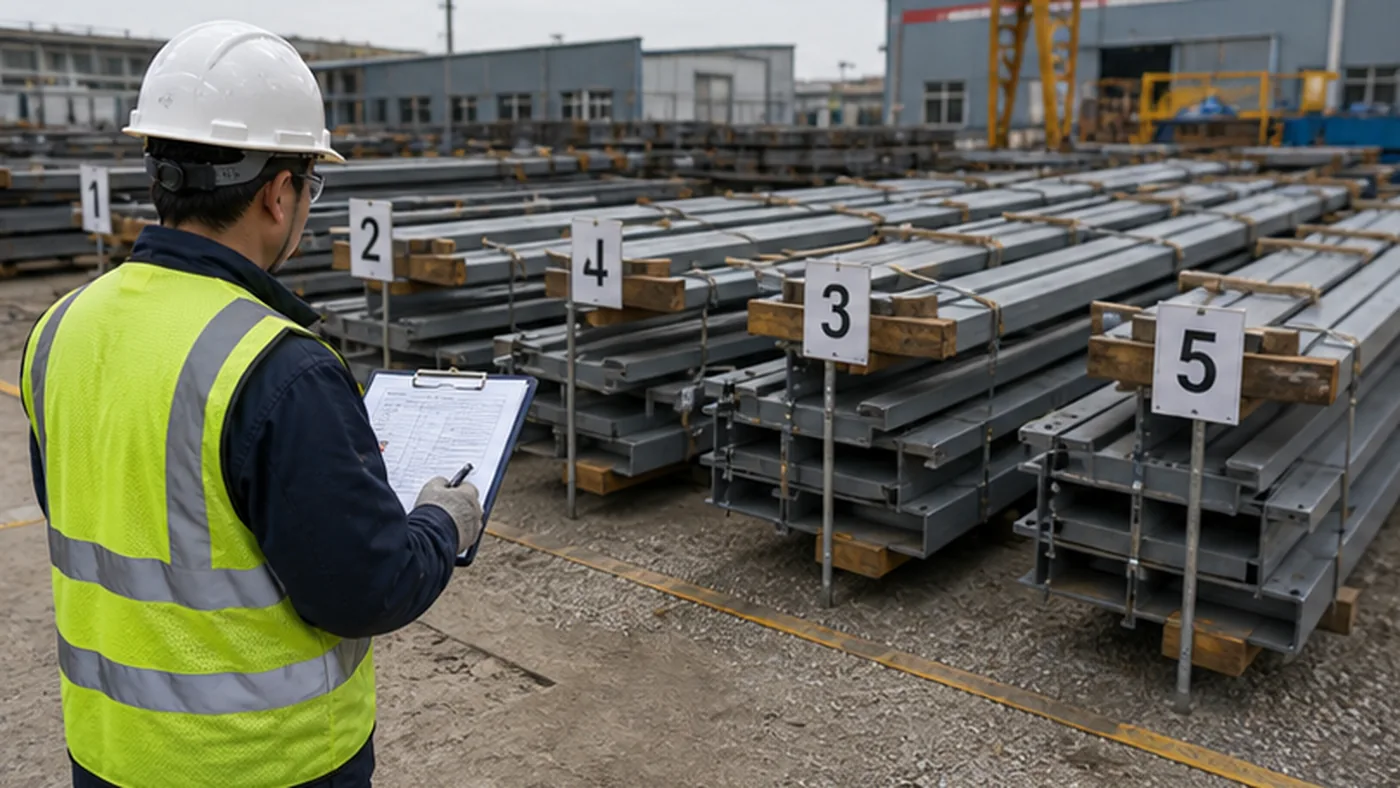
A steel structure delivery sequence checklist helps EPC teams avoid a common export-project problem: the correct components arrive, but not in the order the site can use them. When beams, columns, bolts, bracing, purlins, and small parts are shipped without sequence control, the site team may spend extra time sorting packages, moving bundles, searching for accessories, or delaying erection because one critical group is missing.
This checklist is written for delivery planning before shipment, especially when an industrial building, warehouse, workshop, platform, or pipe-rack package will be shipped in multiple batches or containers.
1. Start with the erection logic
The delivery sequence should follow how the site will erect the structure, not only how the factory finishes fabrication. Before approving a shipment plan, ask the project team which areas must be installed first and which components are needed together.
| Sequence basis | Buyer check |
|---|---|
| Building area | Group components by grid, bay, zone, platform, or erection area where possible. |
| Primary frame first | Columns, beams, rafters, and major bracing should arrive before secondary steel for the same area. |
| Bolts and accessories | Connection bolts, anchor bolts, clips, and loose plates must travel with the components they support. |
| Site access | Sequence should consider crane access, laydown area, unloading route, and storage limits. |
2. Build a shipment batch plan
A shipment batch plan should show what is included in each shipment, why that batch is needed, and what site activity it supports. Avoid batch names that only say "Shipment 1" or "Container 2" without erection context.
- Batch number and planned shipment date.
- Building zone, grid area, or erection stage covered by the batch.
- Main members, secondary steel, bolts, small parts, and documents included.
- Open items or exclusions that must be tracked separately.
- Receiving priority and laydown location at site.
For documents that should accompany each batch, use the steel structure shipping documents checklist.
3. Match packing order to unloading order
Packing should support unloading and site sorting. If the first-needed items are buried under later-stage components, site work can be delayed even when all material has arrived.
| Packing question | What to verify |
|---|---|
| Bundle grouping | Are bundles grouped by erection area, member type, or planned unloading sequence? |
| Label visibility | Can the site team identify package numbers before moving bundles? |
| Small-parts control | Are bolts and accessories separated by area or member group instead of mixed in one box? |
| Damage prevention | Does the sequence avoid repeated handling of painted or galvanized components? |
Use the export packing checklist and packing photo checklist to verify the physical package evidence.
4. Control containers and mixed loads
When a shipment uses multiple containers or trucks, the sequence plan should show which packages are in each load. Mixed loads can be acceptable, but the site team must know how to sort them.
- Container number or truck number linked to package numbers.
- Component marks and bundle numbers listed for each load.
- Small-parts boxes tied to container or shipment batch.
- High-priority erection items clearly marked.
- Loading photos showing package position and label visibility.
For container-specific checks, see the container loading checklist.
5. Prepare site receiving by sequence
Receiving should not wait until all cargo arrives. The site team should know what to check first, where to place each package, and which missing items would block erection.
| Receiving item | Sequence control |
|---|---|
| Package count | Check each batch against the shipment index and package list. |
| Critical components | Confirm first-erection columns, beams, bracing, and bolts immediately after unloading. |
| Laydown location | Place packages by area to avoid repeated moves before erection. |
| Shortage or damage | Report issues by package number, component mark, and affected erection area. |
Use the site receiving checklist to record the arrival evidence.
6. Link sequence to erection material release
A delivery sequence is complete only when received components can be released to the erection team. Before release, check whether documents, bolts, damage reports, and open issues are closed enough for site use.
- Current erection drawings and member marks match the delivered components.
- Bolts and small parts for the area are available and identified.
- Damage or shortage reports are closed or accepted with a workaround.
- Quality records required for release are available.
- The receiver signs off the area or batch release.
For final release control, review the erection material release checklist.
Red flags in delivery sequencing
- Shipments are planned only by fabrication finish date, not by erection need.
- Bolts or accessories are shipped separately without area-level traceability.
- Package labels do not show batch, area, or component marks clearly.
- Container loading records do not identify which packages are in each container.
- Site laydown area is not ready for the planned sequence.
- Missing or damaged items are reported without linking them to the affected erection area.
Buyer note
Good delivery sequencing reduces site sorting work, repeated handling, missing-part disputes, and early erection delays. The sequence should be reviewed before packing starts, not after containers have been loaded.
Buyer follow-up questions
How should buyers use this page?
Use it as a practical review aid for steel structure delivery sequence checklist for epc projects. The page helps the buyer confirm what must be checked, what evidence should be requested, and which follow-up actions should be closed before the package moves to the next procurement step.
When should this review happen?
Use it before packing is closed, before shipment release, and when site teams need clear receiving or handover evidence.
What evidence should be kept?
Keep the records that prove the decision, especially component marks, bundle labels, bolt boxes, packing lists, loading photos, shipping documents, receiving records, and closeout notes. Photos, comments, approvals, open issues, and closeout notes should stay linked to the relevant drawing, supplier reply, shipment, or handover record.
How to use this checklist
Check this buyer-side checklist against the contract, approved drawings, owner requirements, engineer instructions, and the current edition of every project-specified standard. See the editorial and source review process.