Buyer-focused answer
Quick answer for buyers
Steel structure container loading checklist for export projects, covering bundle labels, weight balance, coating protection, photos, and shipment records.
Main question
What should EPC buyers check when using the steel structure container loading checklist for export projects?
Quick answer
Steel structure container loading checklist for export projects, covering bundle labels, weight balance, coating protection, photos, and shipment records.
When to use this page
Use it before packing is closed, before shipment release, or when the site team needs receiving and handover evidence.
What to verify
Confirm the container loading plan; Check bundle condition before loading; Verify weight distribution and lifting safety; Protect coating and visible marks
Related next step
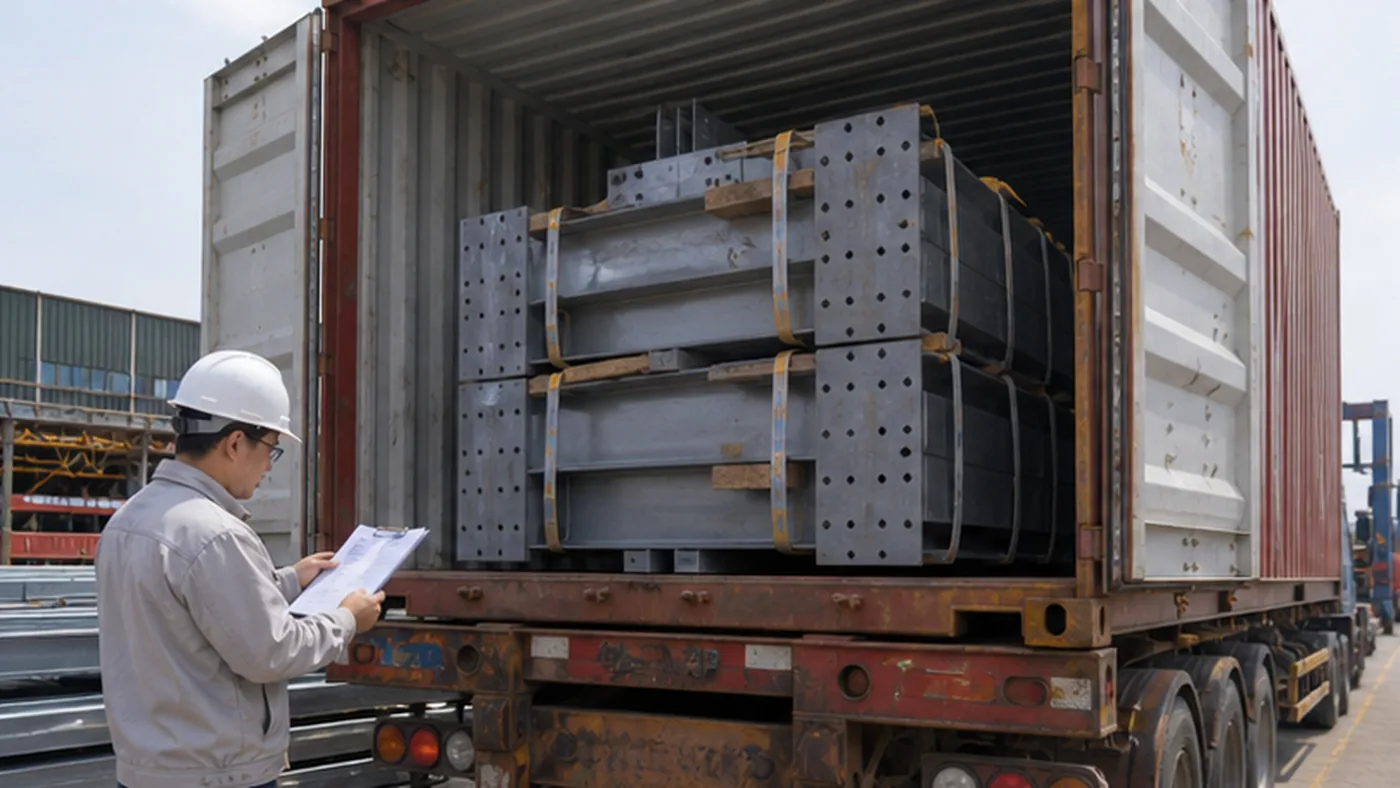
A steel structure container loading checklist for export projects helps EPC buyers verify that fabricated members are loaded safely, traceably, and in a way that supports site receiving. Even when fabrication and packing are correct, poor container loading can cause coating damage, missing small parts, weight imbalance, unloading problems, and weak evidence if a claim is needed.
This checklist is written for project buyers reviewing supplier loading photos and shipment records before container release. It should be used together with the packing list, component marking list, and pre-shipment document package.
1. Confirm the container loading plan
Before loading starts, ask the supplier to prepare a basic loading plan. The plan does not need to be complex, but it should show which bundles and small-parts packages are assigned to each container or shipment batch.
| Plan item | Buyer check |
|---|---|
| Container type | Container, open top, flat rack, or truck type matches member length and weight. |
| Package allocation | Bundle numbers, crates, and small-parts boxes are assigned to a container. |
| Loading sequence | Heavy members, fragile accessories, and site unloading order are considered. |
| Weight control | Container gross weight and weight distribution are checked before release. |
2. Check bundle condition before loading
Inspect bundle condition before the first member enters the container. Once a container is loaded, it becomes harder to see damaged coating, missing labels, loose parts, or poor bundling.
- Bundle numbers match the packing list.
- Component marks remain visible after packing.
- Coating is cured and protected at contact points.
- Straps, separators, timber, or padding are in place where needed.
- Small-parts boxes are closed, labelled, and not overloaded.
Use the export packing checklist to confirm packing condition before loading.
3. Verify weight distribution and lifting safety
Heavy steel bundles must be loaded with attention to weight distribution, lifting method, and unloading conditions. A loading plan that ignores site unloading can create safety and schedule problems later.
| Check point | Why it matters |
|---|---|
| Bundle weight | Site team must have equipment suitable for unloading each bundle. |
| Center of gravity | Unbalanced bundles are harder to lift and may shift during transport. |
| Container floor load | Heavy members must not overload local areas of the container floor. |
| Lashing and blocking | Bundles should be secured to reduce movement during transport. |
4. Protect coating and visible marks
Container loading can damage coating if steel members rub against each other or against container walls. It can also hide component marks if bundles are turned or stacked without planning.
- Use separators or padding at steel-to-steel contact points.
- Keep painted component marks visible where possible.
- Avoid dragging coated members on the container floor.
- Protect sharp edges, plate corners, and protruding bolts.
- Keep touch-up records if coating damage is repaired before release.
For coating evidence, connect the loading review with the steel structure coating inspection checklist.
5. Control bolts, crates, and loose accessories
Small packages can be lost or damaged if they are placed under heavy steel members or loaded without visible labels. The loading photo record should show where bolt boxes and accessory crates are placed.
| Small package | Loading requirement |
|---|---|
| Bolt boxes | Labels visible, package numbers recorded, and boxes protected from crushing. |
| Loose plates and clips | Bundled or boxed with matching drawing or erection area references. |
| Touch-up materials | Packed according to shipping rules and separated from heavy members. |
| Spare parts | Clearly labelled so they are not mistaken for missing or extra items. |
For details, use the bolt and small parts packing checklist.
6. Take a complete loading photo record
Photo evidence should show not only the final closed container, but also key steps during loading. This record helps the buyer, freight forwarder, and site team understand what was shipped and how it was protected.
- Empty container condition before loading.
- Bundle labels and package numbers before loading.
- Loading sequence photos during the process.
- Photos showing blocking, padding, lashing, or protection.
- Final loaded container photo before closing.
- Container number and seal number photo after closing.
7. Match loading records with shipping documents
The container loading list, packing list, photos, and shipping documents should use the same package numbers and container numbers. If each document uses a different naming method, site receiving becomes difficult.
- Container number appears on the loading list and shipping document package.
- Package numbers in photos match the packing list.
- Small-parts packages are listed separately.
- Shipment batch, project number, and purchase order reference are consistent.
Use the steel structure shipping documents checklist for the final document review.
Red flags before container release
- Final loading photos do not show package labels or container numbers.
- Heavy steel members are placed on top of small-parts boxes.
- Painted members touch directly without separators where protection is required.
- Container loading list does not match the packing list.
- No photo shows the seal number or final loaded condition.
- The supplier sends loading photos after the container has already left.
Buyer note
Container loading is the last physical checkpoint before export delivery. Ask suppliers to submit the loading plan, loading photos, and updated packing list before shipment release, especially for large EPC steel structure packages with multiple containers.
Buyer follow-up questions
How should buyers use this page?
Use it as a practical review aid for steel structure container loading checklist for export projects. The page helps the buyer confirm what must be checked, what evidence should be requested, and which follow-up actions should be closed before the package moves to the next procurement step.
When should this review happen?
Use it before packing is closed, before shipment release, and when site teams need clear receiving or handover evidence.
What evidence should be kept?
Keep the records that prove the decision, especially component marks, bundle labels, bolt boxes, packing lists, loading photos, shipping documents, receiving records, and closeout notes. Photos, comments, approvals, open issues, and closeout notes should stay linked to the relevant drawing, supplier reply, shipment, or handover record.
How to use this checklist
Check this buyer-side checklist against the contract, approved drawings, owner requirements, engineer instructions, and the current edition of every project-specified standard. See the editorial and source review process.