Buyer-focused answer
Quick answer for buyers
Steel structure coating inspection checklist for EPC buyers reviewing surface preparation, DFT reports, curing, repairs, photos, and export packing evidence.
Main question
What should EPC buyers check when using the steel structure coating inspection checklist?
Quick answer
Steel structure coating inspection checklist for EPC buyers reviewing surface preparation, DFT reports, curing, repairs, photos, and export packing evidence.
When to use this page
Use it before fabrication release, before shipment, or before final handover when missing records can delay acceptance.
What to verify
Confirm the coating requirement used for inspection; Check surface preparation evidence; Review coating application records; Verify DFT inspection reports
Related next step
A steel structure coating inspection checklist helps EPC buyers confirm that surface treatment has been completed according to the RFQ, project specification, and export delivery requirements. Coating inspection should not be limited to final appearance photos. The buyer needs evidence that surface preparation, paint application, dry film thickness, curing, repair, and packing controls were completed before release.
This checklist is written for procurement and project quality teams that need to review supplier documents before shipment. It does not replace the project coating specification, but it helps buyers request the right records and identify gaps early.
1. Confirm the coating requirement used for inspection
Start by checking whether the inspection records use the same requirement stated in the RFQ or purchase order. If the quotation only says "paint included," the buyer may not have enough information to judge quality.
| Requirement item | What to confirm |
|---|---|
| Surface preparation grade | Blasting or cleaning level, surface profile, and edge treatment are defined. |
| Paint system | Primer, intermediate coat, top coat, paint type, color, and total DFT are stated. |
| Inspection standard | Acceptance basis for appearance, DFT, repair, and reporting is identified. |
| Export condition | Coating and packing are suitable for handling, bundling, and sea transport. |
For the broader coating scope, review the surface treatment requirements for export steel structures.
2. Check surface preparation evidence
Coating performance depends heavily on preparation before painting. The inspection file should show that rust, oil, weld spatter, sharp edges, moisture, and contamination were controlled before primer application.
- Surface preparation report with date, batch, and inspector.
- Photos before and after blasting or cleaning.
- Record of surface profile if required by the project specification.
- Confirmation that weld spatter, slag, sharp edges, and oil were removed.
- Time interval between blasting and primer application.
3. Review coating application records
The buyer should confirm that the paint or galvanizing process matches the approved system. Records should identify the coating material, batch number, application sequence, and environmental condition.
| Record | Buyer review point |
|---|---|
| Paint batch record | Paint name, batch number, shelf life, and mixing ratio are traceable. |
| Environmental record | Temperature, humidity, steel temperature, and dew point are acceptable. |
| Coat sequence record | Primer, intermediate coat, and top coat are applied in the required order. |
| Curing record | Coating has enough curing time before handling, bundling, or loading. |
4. Verify DFT inspection reports
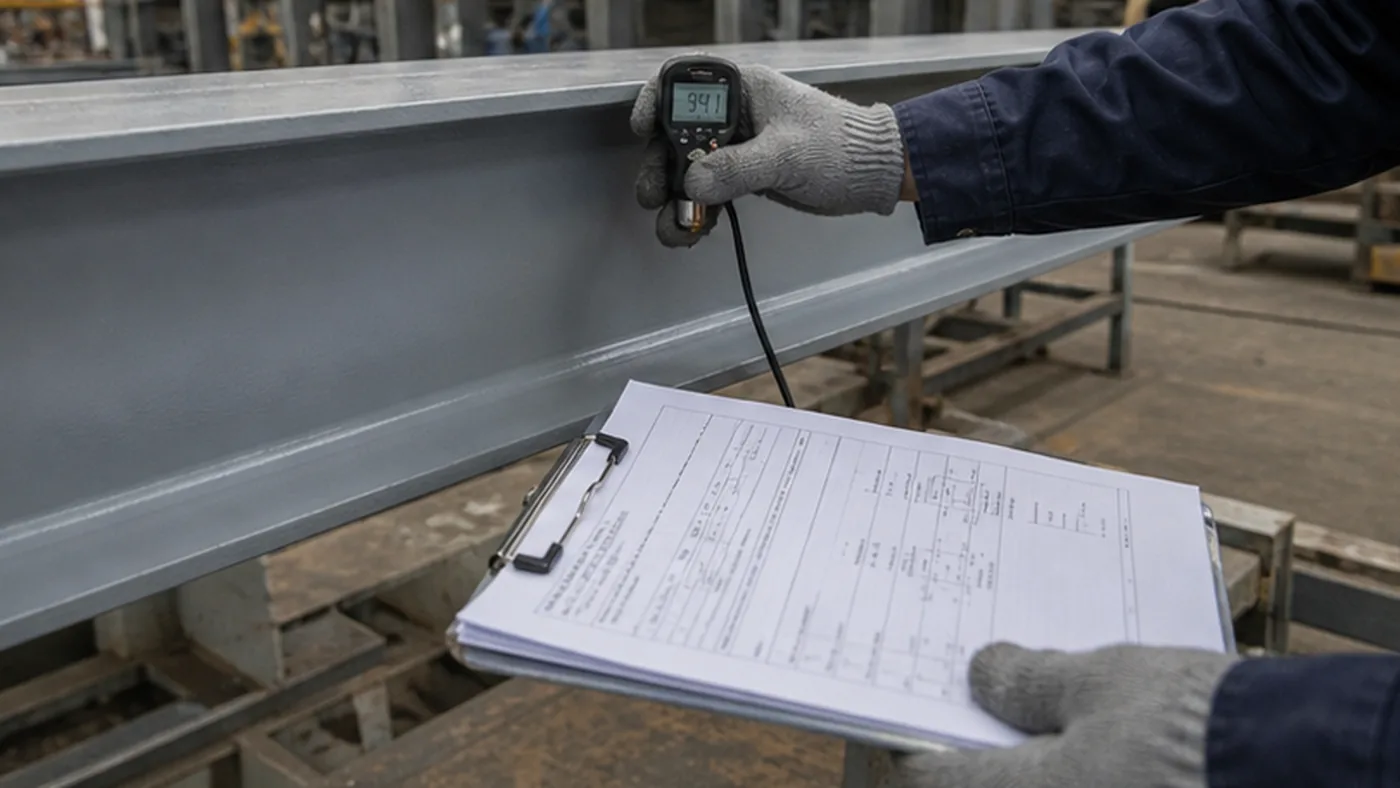
Dry film thickness, often called DFT, is one of the most important coating records. A useful DFT report should identify the component marks, measurement locations, number of readings, acceptance criteria, and any repaired areas.
- DFT gauge identification or calibration record if required.
- Measurement points linked to component marks or inspection batches.
- Minimum, maximum, and average readings where the report format allows.
- Clear pass, repair, or recheck result for thin or damaged areas.
- Inspector name, date, and document revision.
DFT evidence should also be included in the wider steel structure quality documents package.
5. Inspect repairs and touch-up areas
Repairs are common, but they must be visible in the document trail. Coating damage from lifting, moving, welding repairs, or handling should be repaired and recorded before packing.
| Repair item | Required evidence |
|---|---|
| Repair location | Component mark, area, photo, and reason for repair. |
| Repair method | Cleaning, sanding, touch-up paint, stripe coat, or other approved method. |
| Re-inspection | Appearance and DFT are checked again after repair. |
| Closeout | Repair is signed off before packing or shipment release. |
6. Check coating before export packing
For export projects, coating inspection should be connected to packing inspection. Even a compliant coating can be damaged if steel members are bundled too tightly, stacked without separators, or loaded before curing is complete.
- Coating is cured before bundle assembly.
- Component marks remain readable after coating and packing.
- Steel-to-steel contact points are controlled with padding or separators where needed.
- Small parts are packed without rubbing against painted surfaces.
- Bundle photos and container loading photos show coating protection.
Use the export packing checklist and pre-shipment inspection document checklist before releasing the shipment.
7. Red flags in coating inspection documents
- The DFT report gives only one total result without component marks or readings.
- Paint batch information is missing from the coating record.
- Environmental conditions are not recorded for the coating work.
- Repair photos exist, but no re-inspection result is provided.
- Packing photos show direct steel-to-steel contact after final coating.
- The supplier promises to send coating records after shipment.
Buyer note
Coating inspection is easier to control when the RFQ defines the paint system, DFT requirement, record format, and packing expectations. Ask suppliers to submit sample coating reports before award, then use this checklist during the final quality document review.
For suppliers that run their own blasting and painting area, the steel structure coating line audit checklist helps buyers connect document review with workshop capability.
Buyer follow-up questions
How should buyers use this page?
Use it as a practical review aid for steel structure coating inspection checklist. The page helps the buyer confirm what must be checked, what evidence should be requested, and which follow-up actions should be closed before the package moves to the next procurement step.
When should this review happen?
Use it before shipment release, final document turnover, or owner handover when traceability and acceptance records need to be closed.
What evidence should be kept?
Keep the records that prove the decision, especially certificates, heat numbers, inspection records, NCR closure, coating reports, signatures, revisions, and final handover files. Photos, comments, approvals, open issues, and closeout notes should stay linked to the relevant drawing, supplier reply, shipment, or handover record.
How to use this checklist
Check this buyer-side checklist against the contract, approved drawings, owner requirements, engineer instructions, and the current edition of every project-specified standard. See the editorial and source review process.