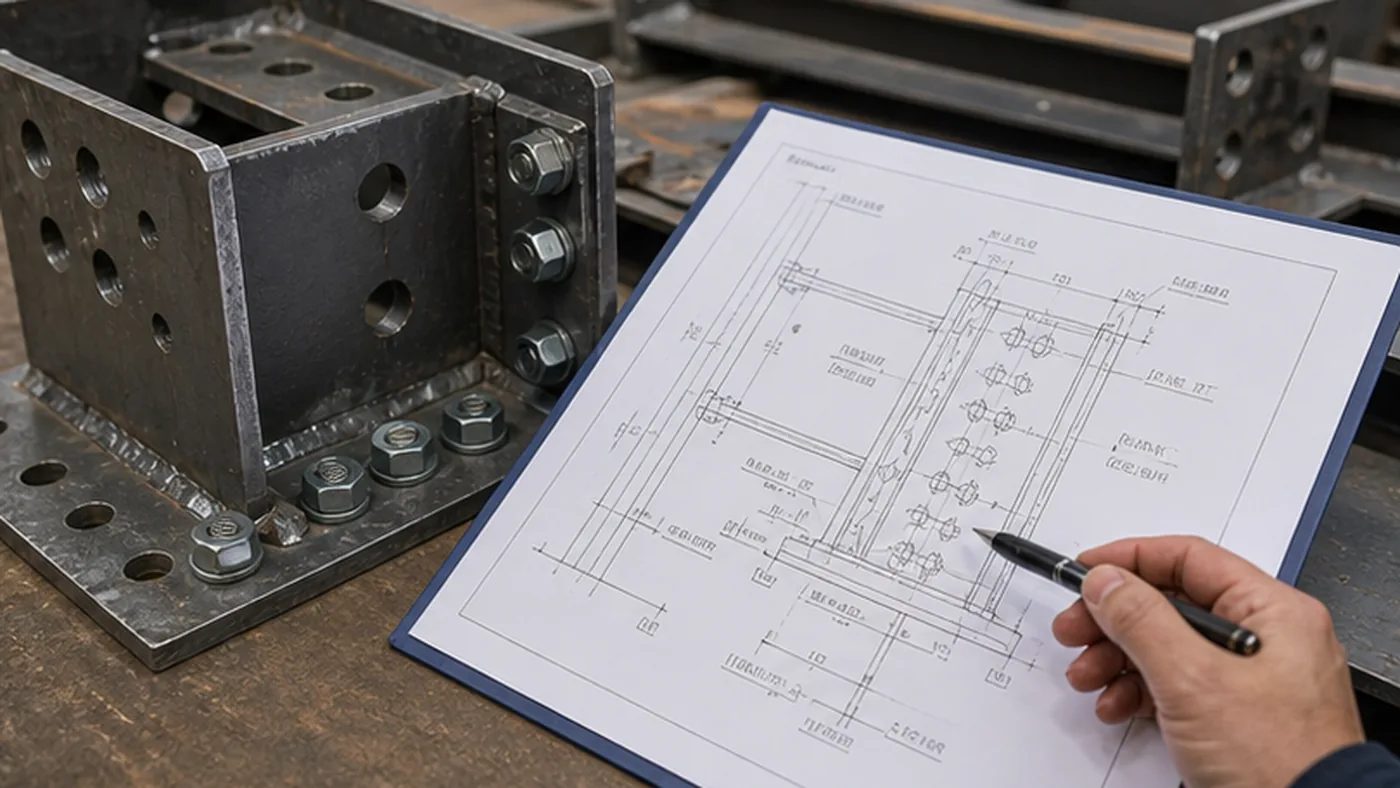
Buyer-focused answer
Quick answer for buyers
Steel structure connection detail checklist before RFQ for EPC buyers reviewing bolt joints, weld scope, base plates, splice points, and fabrication assumptions.
Main question
What should EPC buyers check when using the steel structure connection detail checklist before RFQ?
Quick answer
Steel structure connection detail checklist before RFQ for EPC buyers reviewing bolt joints, weld scope, base plates, splice points, and fabrication assumptions.
When to use this page
Use it before sending RFQs, comparing quotations, or asking fabricators to clarify missing scope.
What to verify
Confirm what the RFQ drawings actually show; List connection types that must be priced; Separate shop welds, site welds, and bolted joints; Check base plates and anchor bolt interfaces
Related next step
A steel structure connection detail checklist before RFQ helps EPC buyers reduce quotation gaps before commercial comparison begins. Connection details can change fabrication time, welding volume, bolt grades, hole patterns, shop drawing workload, packing sequence, and site erection risk. If these details are left vague, bidders may price different assumptions while the quotation table looks comparable.
This guide is written for the stage before a formal RFQ is issued. It does not replace the structural engineer's design responsibility. Its purpose is to help project buyers, package engineers, and procurement teams define what bidders should include, what can remain provisional, and what must be clarified before a purchase decision.
Detailed answer
A steel structure connection detail checklist before RFQ should show which connection families are already defined, which connection assumptions bidders must include, which items remain provisional, and where shop welds, site welds, bolts, base plates, anchor bolts, and splice details change quotation scope. EPC buyers should review connection detail clarity before price comparison because unclear joints create hidden differences in fabrication hours, bolt quantities, drawing effort, packing control, and erection risk. If connection scope is not normalized early, suppliers may return prices that look similar but are based on different technical assumptions.
1. Confirm what the RFQ drawings actually show
Many early steel structure drawing sets show member sizes and grid locations but only limited connection information. That is acceptable if the RFQ clearly states which party will develop the detailed connections and what assumptions bidders should use.
| Drawing condition | RFQ control action |
|---|---|
| Typical connection details are shown | Ask bidders to price according to the typical details and list any exceptions separately. |
| Only member layout drawings are available | State whether connection design and shop drawing development are included in supplier scope. |
| Mixed design revisions are included | Freeze the drawing revision basis before bidders prepare bolt and weld quantities. |
| Owner or engineer approval is pending | Define how later connection changes will be priced and approved after award. |
Before issuing the RFQ, compare this page with the drawings needed for steel structure quotation guide so that plan, elevation, section, connection, and load information are not reviewed in isolation. The RFQ package checklist download is the companion control when the buyer still needs to confirm which drawings, standards, and clarification notes will be issued to every bidder.
2. List connection types that must be priced
The RFQ should not use a single phrase such as "all standard connections included" without further detail. A practical package lists the main connection families and asks each bidder to confirm inclusion, exclusion, or provisional pricing.
- Column base plates, anchor bolt holes, leveling plates, shear keys, and grout-related interfaces.
- Column splices, beam splices, end plates, flange plates, web plates, and site bolted joints.
- Beam-to-column joints, moment connections, simple shear connections, and roof frame joints.
- Bracing gussets, sag rods, purlin cleats, tie rods, and secondary steel attachments.
- Crane beam brackets, platform supports, stair stringer connections, ladder clips, and handrail fixing points.
- Interface plates for equipment, conveyors, pipe racks, cladding support, or civil embedment points.
Where the final design is not available, ask the bidder to state the assumed connection type, bolt grade, plate thickness range, welding category, and whether the assumption is included in the base price or treated as provisional.
If those assumptions remain open, record them in the RFQ exclusion list checklist instead of leaving them inside a broad commercial note. That keeps connection assumptions visible before the quote comparison stage.
3. Separate shop welds, site welds, and bolted joints
Connection scope affects both factory fabrication and site installation. EPC buyers should avoid quotations that combine shop welding, site welding, and bolting into one unclear line. The quotation should show how the fabrication supplier has interpreted each connection location.
| Connection decision | Why it matters before RFQ |
|---|---|
| Shop welded connection | Usually improves site speed but may increase transport size, coating repair needs, and handling constraints. |
| Site bolted connection | Requires bolt lists, packing control, hole tolerance, clear piece marks, and installation sequence planning. |
| Site welded connection | May require site welding qualification, weather protection, NDT access, coating repair, and clearer responsibility boundaries. |
| Hybrid connection | Needs clear division between factory work, site work, inspection records, and responsibility for missing small parts. |
For bolt-related delivery control, link the RFQ assumptions to the bolt and small parts packing checklist. If the buyer cannot track bolts by connection zone, site installation delays are more likely even when fabrication quality is acceptable.
4. Check base plates and anchor bolt interfaces
Base plates often sit between steel fabrication scope and civil construction scope. Before RFQ, confirm whether the steel supplier prices base plates only, anchor bolts, templates, nuts, washers, leveling plates, grout holes, shear keys, and embedment templates.
- Confirm anchor bolt diameter, grade, projection, embedment, thread length, and coating or galvanizing requirement.
- Clarify whether anchor bolt templates are supplied, marked, packed, and delivered before steel members.
- Check whether slotted holes, oversized holes, leveling nuts, or special washers are required.
- State whether base plate design is final or provisional, especially for crane buildings and equipment platforms.
- Define who checks civil foundation tolerances before steel erection begins.
If anchor bolt information is still open, do not hide it inside a generic exclusion. Record it in the RFQ exclusion list checklist so all bidders treat the same risk in the same way.
5. Review connection information before quote comparison
When quotations arrive, the buyer should not compare only total tonnage and unit price. Review the connection assumptions first. A lower price may be caused by fewer connection plates, excluded bolts, missing site splice plates, no connection design scope, or an assumption that all complex connections will be resolved after award.
| Quote review question | Acceptable evidence |
|---|---|
| Are connection design and shop drawings included? | Clear scope statement, deliverable list, approval cycle, and revision treatment. |
| Are bolts and small parts included? | Bolt grade basis, quantity method, packing rule, spare percentage, and marking method. |
| Are site splices identified? | Drawing references, splice location basis, plate/bolt inclusion, and erection sequence assumptions. |
| Are special connections priced? | Separate confirmation for crane beams, bracing, equipment interfaces, platforms, and stairs. |
After the technical differences are visible, move into the steel structure fabrication quote comparison guide so the connection scope differences are normalized before the commercial ranking meeting.
6. RFQ checklist for connection details
Use the following checklist before releasing the RFQ or before shortlisting bidders:
- The drawing revision basis is frozen for pricing.
- Typical connection details or design responsibility are clearly stated.
- Base plates, anchor bolts, templates, nuts, washers, and leveling parts are separated by scope owner.
- Shop weld, site weld, and site bolt assumptions are visible.
- Splices, gussets, cleats, brackets, and secondary steel attachments are not hidden in a general note.
- Connection-related coating repair, galvanizing, packing, and piece marking requirements are linked to delivery documents.
- Provisional connection assumptions have a commercial treatment before award.
- Each bidder must submit exceptions in the same clarification table.
A controlled connection detail checklist makes the RFQ more comparable and reduces post-award disputes. It also gives the buyer a better basis for checking shop drawings, bolt packing, delivery sequence, and site receiving records after the purchase order is placed.
Frequently asked questions
Why should connection details be checked before a steel structure RFQ?
Connection details affect fabrication hours, bolt quantities, welding scope, shop drawing effort, packing sequence, and site installation risk. Checking them before RFQ helps bidders price the same scope.
Which steel structure connections need the most attention before quotation?
Base plates, column splices, beam-to-column joints, bracing gussets, crane beam connections, roof frame joints, platform supports, and interface points with civil or equipment packages usually need close RFQ review.
Should an EPC buyer request final connection design before RFQ?
Not always. Early RFQ packages may use typical details and clear assumptions, but the buyer should state whether connection design, shop drawing development, bolt calculation, and approval revisions are included.
Buyer follow-up questions
How should buyers use this page?
Use it as a practical review aid for steel structure connection detail checklist before rfq. The page helps the buyer confirm what must be checked, what evidence should be requested, and which follow-up actions should be closed before the package moves to the next procurement step.
When should this review happen?
Use it before issuing an RFQ or when quotations are difficult to compare because drawings, scope, or assumptions are unclear.
What evidence should be kept?
Keep the records that prove the decision, especially drawings, revision status, scope boundaries, material and coating standards, destination data, schedule assumptions, and supplier exclusions. Photos, comments, approvals, open issues, and closeout notes should stay linked to the relevant drawing, supplier reply, shipment, or handover record.
How to use this checklist
Check this buyer-side checklist against the contract, approved drawings, owner requirements, engineer instructions, and the current edition of every project-specified standard. See the editorial and source review process.