Buyer-focused answer
Quick answer for buyers
Steel structure site quality hold checklist: define hold triggers, evidence, repair approval, release limits, photos, and closeout before erection continues.
Main question
What should EPC buyers check when using the steel structure site quality hold checklist?
Quick answer
Steel structure site quality hold checklist: define hold triggers, evidence, repair approval, release limits, photos, and closeout before erection continues.
When to use this page
Use it before fabrication release, before shipment, or before final handover when missing records can delay acceptance.
What to verify
Define when a quality hold is required; Record the hold scope; Separate held materials from released materials; Assign an owner and decision path
Related next step
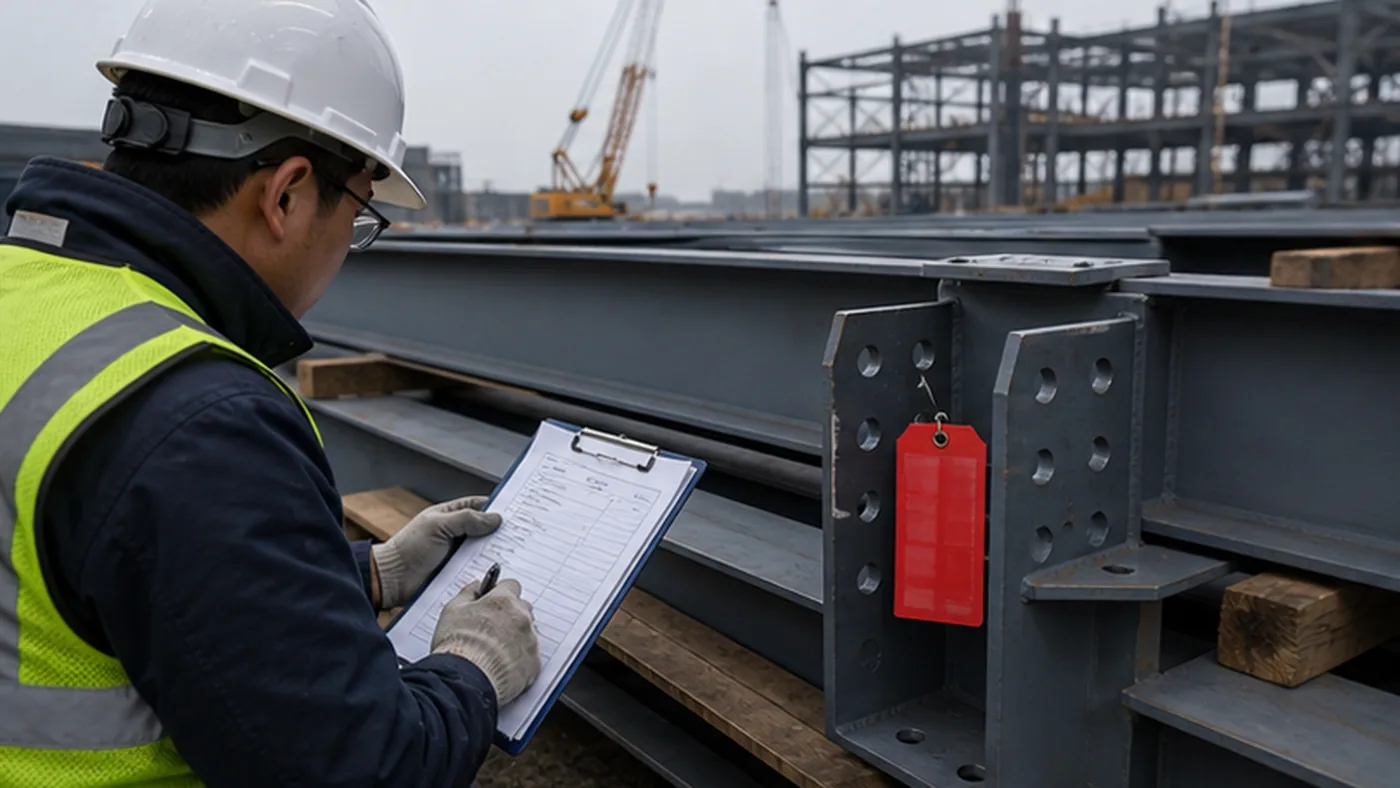
A steel structure site quality hold checklist helps EPC teams control components, bolts, documents, coating repairs, NCR items, and damaged materials when a problem is found at site. A quality hold is not only a note in an issue log. It is a temporary control that prevents the wrong material from being installed before the issue is reviewed and released.
This page is written for EPC buyers, site quality engineers, material controllers, receiving teams, and installation supervisors. It supports the gap between site receiving, pre installation quality checks, NCR closeout, and erection material release.
1. Define when a quality hold is required
The team should agree on clear triggers before installation starts. If every minor issue becomes a hold, work slows down. If serious issues are treated as normal punch items, quality risk moves into erection.
| Hold trigger | Why it matters |
|---|---|
| Unidentified component | The item cannot be matched to the drawing, mark list, package list, or erection sequence. |
| Visible deformation | Bending, twisting, dents, or handling damage may affect fit-up or load path. |
| Coating or galvanizing damage | Repair evidence may be needed before the item is installed or hidden. |
| Wrong or damaged bolts | Bolt grade, size, quantity, thread condition, or matching accessories are not acceptable. |
| Open NCR or missing approval | The item has a known quality issue that has not been closed or accepted. |
For inspection before release, use the pre installation quality check checklist.
2. Record the hold scope
A site quality hold should be specific enough that warehouse, quality, and erection teams can identify exactly what is controlled.
- Component mark number, package number, batch, shipment, or container reference.
- Drawing number, revision, gridline, bay, area, or erection sequence.
- Reason for hold and first person who identified the issue.
- Photos, receiving record, inspection note, or NCR reference.
- Physical storage location and whether the item is segregated from released materials.
If the issue was found during receiving, compare it with the site receiving checklist.
3. Separate held materials from released materials
Quality holds fail when held items remain mixed with released items. The control should be visible and practical for site teams.
- Use a clear tag, label, paint mark, or hold notice that cannot be confused with erection marks.
- Move held items to a defined quarantine area when size and lifting access allow.
- Keep bolts and small parts in controlled packages if the hold relates to grade, size, or quantity.
- Do not allow held materials to be loaded for erection until release is signed.
- Update the material control record so the hold is visible to planning and installation teams.
For broader material control, use the site material control checklist.
4. Assign an owner and decision path
Every hold needs a responsible owner and a decision route. Otherwise the item may remain blocked without action, or it may be released informally.
| Role | Typical responsibility |
|---|---|
| Site quality | Issue verification, hold record, evidence check, and release recommendation. |
| Material control | Physical segregation, label control, location update, and material status tracking. |
| Installation supervisor | Confirms whether the hold affects erection sequence, access, or manpower planning. |
| Engineering or supplier | Reviews repair method, dimensional acceptance, replacement need, or use-as-is approval. |
| EPC buyer or project team | Confirms commercial, schedule, document, or replacement action where required. |
5. Collect evidence before any release
The release decision should be based on evidence, not only verbal approval. The required evidence depends on the issue type.
- Clear photos of the issue, component mark, package label, and storage location.
- Measurement record if deformation, hole mismatch, length, or fit-up is involved.
- Coating repair record, DFT check, or galvanizing repair evidence where required.
- Bolt certificate, package label, size verification, and quantity confirmation.
- NCR, repair method, re-inspection record, and formal acceptance when the issue is significant.
For defect evidence and repair approval, use the steel structure NCR checklist.
6. Control repair and re-inspection
Repair work should not start only because the problem is visible. The project should confirm whether repair is allowed at site and what inspection is needed after repair.
- Confirm whether the repair can be done at site or requires supplier replacement.
- Check whether welding repair, drilling, cutting, coating repair, or straightening needs approval.
- Record who performed the repair and which procedure or instruction was used.
- Complete re-inspection before changing status from hold to released.
- Keep before and after photos in the same hold record.
For coating-specific evidence, review the coating inspection checklist.
7. Define release status clearly
The final hold decision should not be ambiguous. Each held item should end with a clear status that can be understood by quality, material control, and erection teams.
| Status | Meaning |
|---|---|
| Hold remains open | The item cannot be installed, repaired, or moved to erection without further action. |
| Released for repair only | The item may be repaired but not installed until re-inspection is complete. |
| Released with limitation | The item may be used only under written limitation, sequence, or follow-up control. |
| Released for installation | The issue is closed, accepted, or no longer blocks installation. |
| Rejected or replacement required | The item cannot be used and replacement or re-fabrication is required. |
For final release, use the erection material release checklist.
8. Keep the issue visible until closeout
A quality hold should remain visible in the site issue log until the final status is confirmed. This prevents the same item from being questioned again during handover or turnover.
- Hold number or issue number.
- Component or package reference.
- Current status and responsible owner.
- Required action and due date.
- Final closeout evidence and release signature.
For tracking open items, use the site issue log template.
Red flags in site quality holds
- Held items are stored together with released materials without visible status control.
- Installation starts before NCR, repair, or engineering acceptance is closed.
- Only verbal approval exists for repair or use-as-is release.
- Photos show the defect but not the component mark or package reference.
- Material control, quality, and erection teams use different status records.
- Hold items are removed from the log before closeout evidence is attached.
Buyer note
A site quality hold checklist protects EPC buyers from hidden installation risk. The hold record should define what is controlled, why it is controlled, who owns the decision, what evidence is required, and when the item can be released. The goal is not to stop work unnecessarily. The goal is to prevent unresolved quality issues from entering the erection sequence.
Buyer follow-up questions
How should buyers use this page?
Use it as a practical review aid for steel structure site quality hold checklist. The page helps the buyer confirm what must be checked, what evidence should be requested, and which follow-up actions should be closed before the package moves to the next procurement step.
When should this review happen?
Use it before shipment release, final document turnover, or owner handover when traceability and acceptance records need to be closed.
What evidence should be kept?
Keep the records that prove the decision, especially certificates, heat numbers, inspection records, NCR closure, coating reports, signatures, revisions, and final handover files. Photos, comments, approvals, open issues, and closeout notes should stay linked to the relevant drawing, supplier reply, shipment, or handover record.
How to use this checklist
Check this buyer-side checklist against the contract, approved drawings, owner requirements, engineer instructions, and the current edition of every project-specified standard. See the editorial and source review process.