Buyer-focused answer
Quick answer for buyers
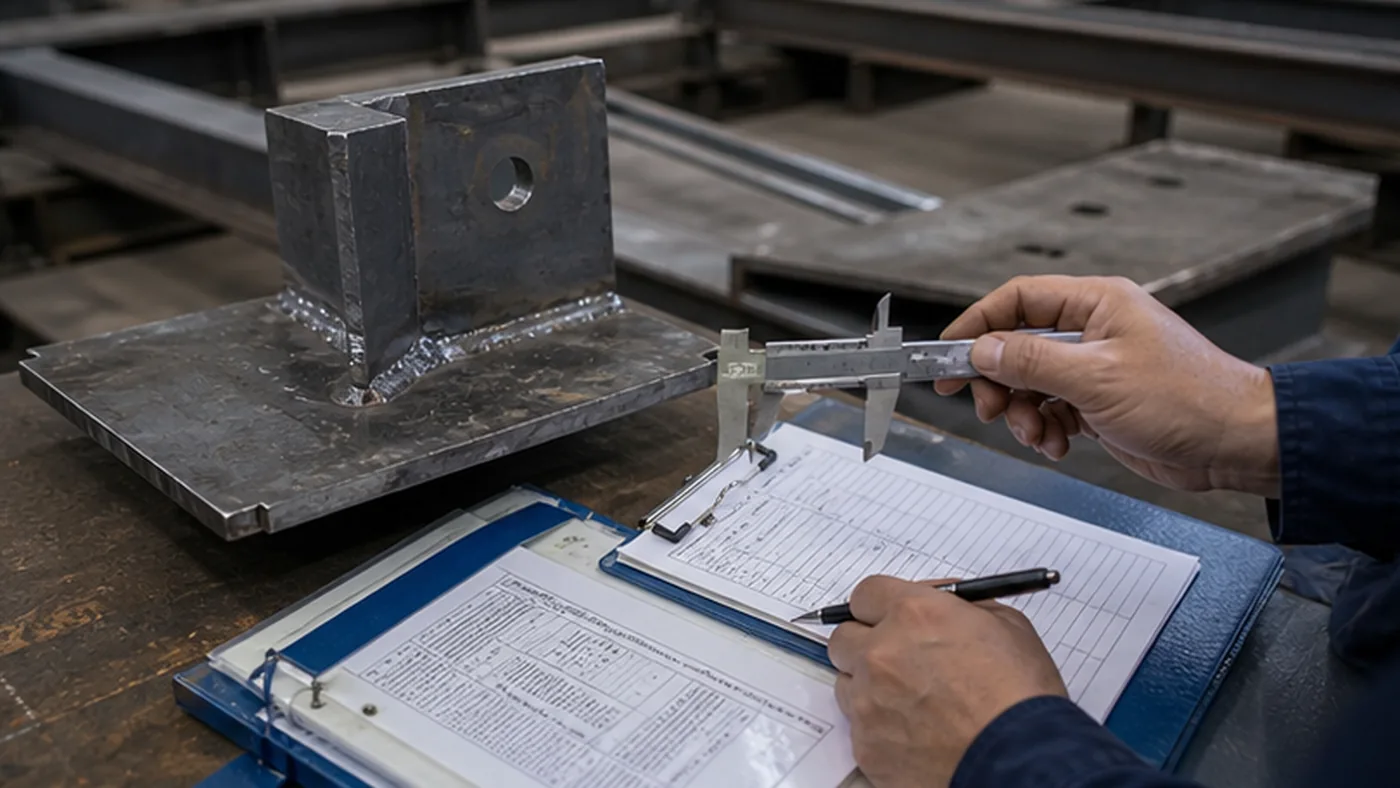
Steel structure minor defect concession checklist: decide which defects can be accepted, repaired, held, or escalated before shipment release.
Main question
What should EPC buyers check when using the steel structure minor defect concession checklist?
Quick answer
Steel structure minor defect concession checklist: decide which defects can be accepted, repaired, held, or escalated before shipment release.
When to use this page
Use it before supplier shortlist approval or when quotations differ because each supplier used different assumptions.
What to verify
Define what counts as minor; Classify the defect before deciding release; Check whether the defect affects installation; Review structural and specification risk
Related next step
A steel structure minor defect concession checklist helps EPC buyers avoid two common problems: accepting defects too casually because they seem small, or holding complete shipments because every small issue is treated like a critical nonconformance. Minor defects can sometimes be accepted under concession, but only when the defect scope is clear, the effect is understood, the approval authority is correct, and the closeout evidence is traceable.
This checklist is for buyer quality teams, procurement teams, third-party inspectors, engineering reviewers, and site receiving teams. It is most useful after inspection comments, before shipment release, during NCR review, or when a supplier asks whether a defect can be accepted without full repair.
1. Define what counts as minor
A minor defect should be limited, measurable, and unlikely to affect structural performance, installation fit, coating durability, safety, owner acceptance, or future maintenance. The word "minor" should never be based only on supplier opinion. It should be supported by drawings, specifications, tolerances, inspection records, and practical site impact review.
For steel structure projects, a small scratch, paint blemish, missing non-critical photo, or slight packing mark may be minor. A wrong hole position, missing bolt set, unapproved weld repair, material traceability gap, or dimensional deviation at a connection should not be treated as minor without engineering review.
2. Classify the defect before deciding release
Classify each defect before choosing concession, repair, hold, or escalation. A defect that is minor on one project may be critical on another because of site sequence, owner inspection requirements, coating system, or installation method.
| Defect type | Possible decision | Evidence needed |
|---|---|---|
| Small coating scratch | Touch-up then release or concession | Repair photo, compatible paint, final inspection. |
| Cosmetic surface mark | Concession may be acceptable | Photo, location, buyer or owner acceptance if required. |
| Minor packing label issue | Correct before loading | Updated label photo and packing list match. |
| Connection tolerance issue | Escalate or hold | Measurement record and engineering review. |
| Missing material certificate | Hold or conditional document closeout | Traceability record and due date. |
3. Check whether the defect affects installation
Installation impact is often more important than visual severity. A defect that looks minor at the factory may delay erection if it affects bolt alignment, mark identification, fitting sequence, temporary bracing, site welding, or access for lifting. Ask whether the site team can install the component without additional cutting, drilling, grinding, coating repair, or sorting.
If the answer is uncertain, do not approve the concession only from procurement. Ask the site engineer or structural reviewer to confirm whether the defect can be accepted, repaired on site, or must be corrected before shipment.
4. Review structural and specification risk
Minor appearance does not always mean minor risk. The checklist should identify whether the issue touches structural design, weld acceptance, base plate contact, bolt hole size, galvanizing thickness, paint system, fire protection interface, or material substitution. If it does, the item should be escalated to engineering or quality before release.
When the relevant specification has a clear tolerance, record both the required tolerance and the measured condition. If the measured condition is outside tolerance, explain why it is still acceptable or what repair is required.
5. Decide the correct disposition
Use clear disposition choices instead of vague approval language. Typical choices are accept as-is by concession, repair before release, repair after shipment under condition, hold affected item, reject item, or escalate for engineering decision. Each choice should have a responsible owner and evidence requirement.
A concession decision should be limited to the affected marks and shipment batch. It should not become a general permission for the supplier to repeat the same defect in later production.
6. Require practical closeout evidence
Every minor defect concession should have a record that can be checked later. Evidence may include marked photos, inspection measurements, NCR reference, repair method, final repair photo, third-party inspector comment, buyer approval, owner approval, or site receiving instruction.
The evidence should show both the original defect and the final accepted condition. For a coating scratch, show the scratch location, repair method, and final surface. For a label issue, show the corrected label and matching packing list. For a dimensional comment, show the measured value and the reviewer decision.
7. Keep minor defects visible in the handover package
Accepted minor defects should not disappear from the project record. If the site team may notice the issue during receiving or erection, include a short note in the handover file. This prevents the same defect from being raised again as a new claim after arrival.
The note should be concise: affected marks, defect description, accepted condition, approval reference, and any site instruction. Avoid sending the site team a large uncontrolled email chain as the only evidence.
8. Track repeated minor defects
A single minor defect may be acceptable. Repeated minor defects are a supplier performance signal. Track whether the same type of issue appears across batches: coating scratches, label errors, missing photos, bolt packing mistakes, small dimensional comments, or late document corrections.
If the pattern repeats, ask for corrective action even if each individual issue is small. Repetition suggests process weakness in handling, inspection, packing, document control, or final release review.
9. Use a minor defect decision matrix
A decision matrix helps buyers avoid inconsistent approvals between inspectors, suppliers, and project teams.
| Question | If yes | If no |
|---|---|---|
| Can the defect affect safety or structural performance? | Escalate or hold. | Continue review. |
| Can the defect affect installation sequence or fit? | Ask engineering/site team before release. | Continue review. |
| Is the affected mark and batch clearly identified? | Record in concession register. | Do not approve until traceable. |
| Is the evidence complete enough for handover? | Accept, repair, or conditionally release. | Request missing evidence. |
| Has this defect repeated in earlier batches? | Request corrective action trend review. | Close as isolated issue if acceptable. |
10. Link the decision to supplier review
Minor defect concessions should feed into supplier evaluation. The buyer should record how often concessions are requested, how quickly the supplier provides evidence, whether repairs are completed correctly, and whether repeated issues reduce after corrective action.
This does not mean punishing every small defect. It means using concession history to identify whether the supplier has stable process control or is relying on buyer acceptance to pass incomplete work.
Warning signs
- The defect is called minor without measured evidence or photos.
- The affected component mark is not identified.
- The defect may affect a connection, bolt hole, weld, material certificate, or coating system.
- The site team is expected to handle the issue without receiving instructions.
- The same minor defect appears repeatedly across shipments.
- The concession approval does not state who accepted the risk.
Buyer note
Minor defect concession works only when the buyer controls scope, evidence, authority, and follow-up. A small defect with clear evidence may be accepted without delaying shipment. A small-looking defect with unclear impact, repeated pattern, or missing traceability should be treated as a real release risk until the decision basis is stronger.
Buyer follow-up questions
How should buyers use this page?
Use it as a practical review aid for steel structure minor defect concession checklist. The page helps the buyer confirm what must be checked, what evidence should be requested, and which follow-up actions should be closed before the package moves to the next procurement step.
When should this review happen?
Use it after a minor defect is documented and before concession approval, release, or shipment.
What evidence should be kept?
Keep the records that prove the decision, especially capacity evidence, quotation assumptions, audit findings, quality-document discipline, export packing experience, and schedule realism. Photos, comments, approvals, open issues, and closeout notes should stay linked to the relevant drawing, supplier reply, shipment, or handover record.
How to use this checklist
Check this buyer-side checklist against the contract, approved drawings, owner requirements, engineer instructions, and the current edition of every project-specified standard. See the editorial and source review process.