Buyer-focused answer
Quick answer for buyers
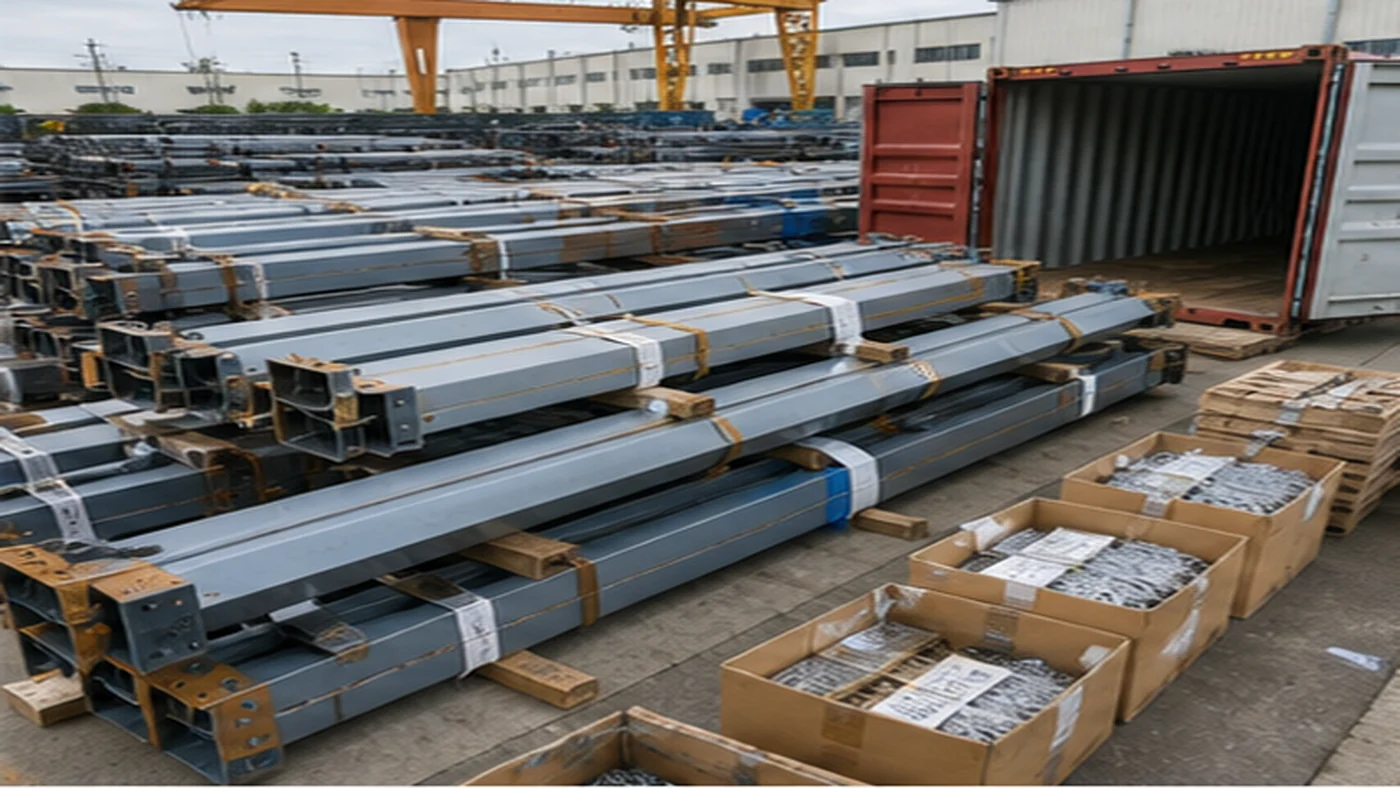
Export packing should keep every steel component identifiable from factory release through container loading, shipping documents, site receiving, storage, and installation handover.
Main question
Export packing guide for steel structure components
When to use this page
Use it before supplier award, shipment release, or internal procurement review when evidence must be clear and comparable.
What to verify
Component identity; Bundle planning; Small parts control; Photo evidence
Evidence behind this guidance
The page connects each recommendation to buyer-verifiable evidence, structured follow-up checks, related internal resources, and a correction contact path.
Last reviewed
2026-07-10
Contact
Buyer problem this guide addresses
Correct quantities still arrive as a site problem when bundles, loose parts, protection, and loading sequence are not tied to installation needs.
Buyer decision table and evidence checklist
| Review area | What the buyer should confirm |
|---|---|
| Component identity | Use durable marks, piece numbers, bundle numbers, drawing references, destination area, and packing list links. |
| Bundle planning | Group components by erection sequence, weight, coating protection, container plan, and site receiving capability. |
| Small parts control | Separate bolts, nuts, washers, plates, shims, and special parts with labels that match the packing list. |
| Photo evidence | Capture component marks, bundle condition, bolt boxes, container loading sequence, and seal records before dispatch. |
| Site handover | Make receiving teams able to match containers, bundles, drawings, and missing part reports without guessing. |
Why export packing fails
Export packing fails when the supplier focuses on loading containers but not on site identification. A package can leave the factory complete and still create site delays if marks, bundle groups, small parts, or packing photos cannot be matched to the erection sequence.
Packing evidence buyers should request
Request photos before loading, during loading, and after loading. Photos should show bundle labels, component marks, bolt box labels, container numbers, seal numbers, and visible protection conditions.
Connection to shipment release
Packing should not be separated from quality release. If component marks, bolt boxes, or packing lists are incomplete, shipment release should remain conditional until the evidence is corrected.
Step-by-step practical guidance
- Confirm the buyer decision that depends on component identity before moving to supplier comparison or shipment release.
- Collect evidence for bundle planning and keep the source files linked to the relevant drawing, supplier reply, inspection report, or packing record.
- Review small parts control with the project quality, procurement, and logistics teams before approval.
- Close open assumptions in photo evidence before final award, shipment release, or payment approval.
- Record the final decision, responsible owner, and follow-up date for site handover so the next project stage can verify it.
Practical example
Bolt boxes are counted correctly but mixed across erection zones. The buyer requires zone-based labels and box photographs before the next container is sealed.
Red flags buyers should not ignore
- The supplier cannot provide verifiable evidence for component identity.
- The quotation, audit result, or release decision depends on undocumented assumptions about bundle planning.
- Records for small parts control are generic, undated, or not linked to this project package.
- Open issues under photo evidence are accepted verbally without owner, deadline, or closeout evidence.
- The buyer is asked to approve the package before site handover is complete enough for the next project stage.
Related guides
Use these supporting pages to move from the high-level decision guide into the detailed checklist that matches the next procurement step.
Frequently asked questions
What should export packing for steel structures include?
It should include durable component marking, bundle labels, bolt box control, packing lists, protection measures, loading photos, shipping marks, and receiving instructions.
Why are packing photos important?
Packing photos help buyers verify what was loaded, how components were protected, and whether labels match the packing list before shipment issues become site problems.
When should packing be checked?
Packing should be checked before container loading, during loading, and at site receiving.
Editorial note
This guide is written for EPC steel structure buyers and procurement teams. It is a procurement reference, not engineering design approval, inspection certification, legal advice, or a substitute for project-specific specifications.
Corrections and contact
If a buyer finds an unclear recommendation, outdated term, or missing procurement evidence point on this page, send the correction note to [email protected]. Include the page URL, the affected section, and the project stage so the editorial note can be reviewed without changing the guide's procurement purpose.