Buyer-focused answer
Quick answer for buyers
Steel structure supplier inspection response checklist: review defect replies, repair evidence, re-inspection records, release decisions, and repeat NCR risk.
Main question
What should EPC buyers check when using the steel structure supplier inspection response checklist?
Quick answer
Steel structure supplier inspection response checklist: review defect replies, repair evidence, re-inspection records, release decisions, and repeat NCR risk.
When to use this page
Use it before supplier shortlist approval or when quotations differ because each supplier used different assumptions.
What to verify
Confirm the inspection comment is clearly identified; Separate correction, corrective action, and release evidence; Check repair evidence before closing the comment; Review re-inspection records
Related next step
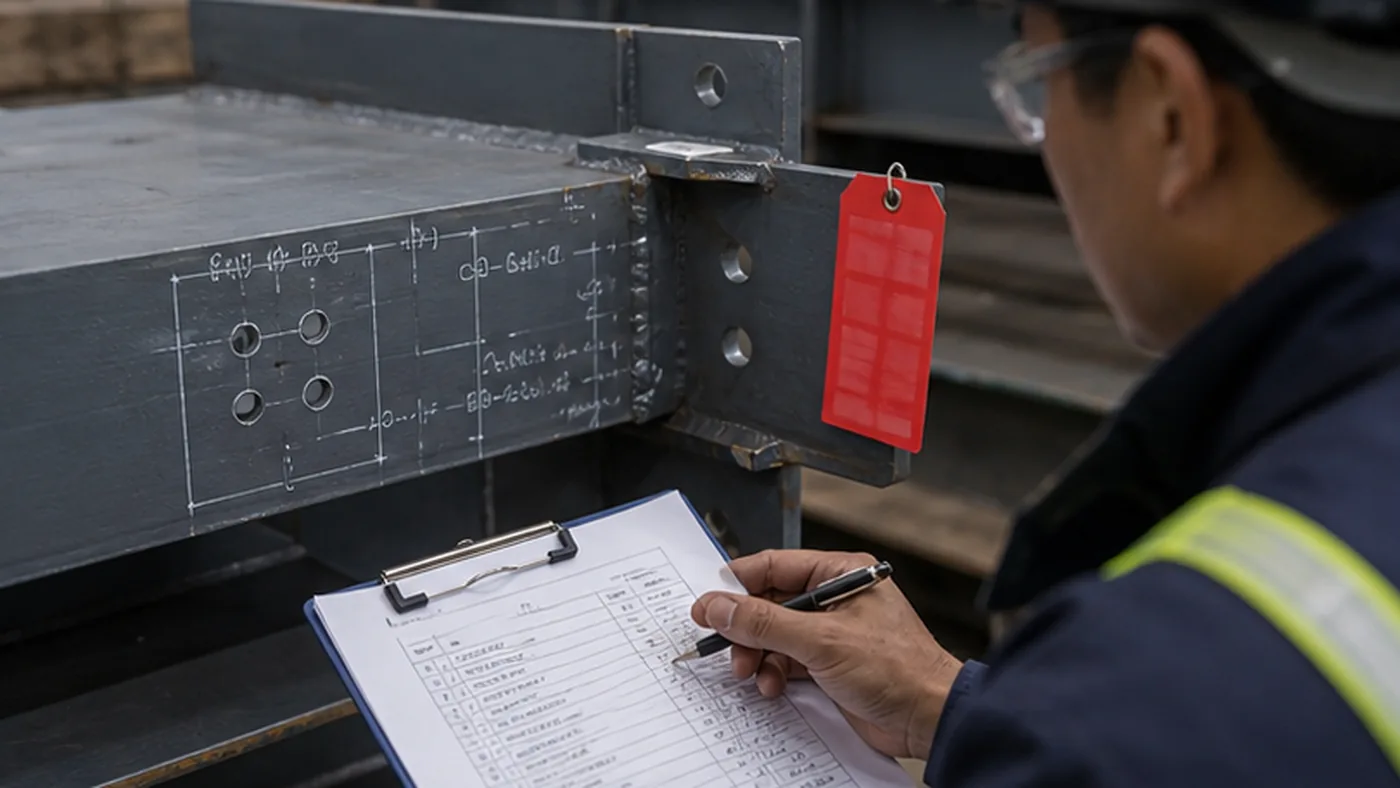
A steel structure supplier inspection response checklist helps EPC buyers control what happens after an inspection comment, defect observation, or release hold. The first inspection finding is only the start of the process. The supplier still needs to confirm the scope, explain the cause, complete repair or correction, submit evidence, and show that the affected components can be released without creating site risk.
This checklist is useful after dimensional inspection, welding inspection, coating inspection, galvanizing inspection, packing inspection, or pre-shipment inspection. It is also useful when comparing suppliers after a completed order because inspection response quality is a strong signal of project control.
1. Confirm the inspection comment is clearly identified
Every response should begin with the exact inspection item being answered. The supplier should reference the inspection report number, date, component mark, drawing revision, defect description, photo number, and affected quantity. If the comment is only answered in general wording, the EPC team may not know whether the right item was corrected.
For repeated comments, require the supplier to group findings by defect type. A welding repair comment, a coating damage comment, and a missing mark comment should not be closed with the same response line. Each has different evidence and different release risk.
2. Separate correction, corrective action, and release evidence
Many weak supplier replies mix three different things. Correction is the immediate repair or replacement. Corrective action is the process change that prevents recurrence. Release evidence is the record proving the affected item is acceptable after correction. The response should make these parts visible.
| Response item | What the buyer should check |
|---|---|
| Correction | What was repaired, replaced, reworked, remarked, or re-packed? |
| Corrective action | What process, inspection step, or control method changed? |
| Release evidence | Which report, photo, measurement, or signature proves acceptance? |
| Effectiveness | How will the next batch show that the issue did not repeat? |
3. Check repair evidence before closing the comment
Repair evidence should be specific enough to support the closeout decision. For weld repairs, the buyer may need repair method approval, welder identity, NDT result, re-inspection record, and final photo. For coating repairs, the buyer may need surface preparation evidence, DFT readings, curing confirmation, and repair area photos.
Do not close an inspection comment only because the supplier says the problem has been solved. The closeout file should show the before condition, repair or correction step, after condition, and final inspector acceptance.
Related resource: steel structure repair photo record checklist.
4. Review re-inspection records
Re-inspection records should match the original defect scope. If five component marks were affected, all five should appear in the re-inspection evidence unless the buyer approved a sampling method. The record should show who re-inspected, what method was used, what criteria were applied, and whether the result was accepted, conditionally accepted, or rejected again.
For serious defects, the re-inspection record should also show whether related components were checked for the same failure mode. A single corrected member does not prove that a batch-wide process issue has been controlled.
5. Ask for drawing or specification references
A strong inspection response refers back to the applicable drawing, specification, inspection test plan, coating requirement, welding procedure, or packing requirement. This prevents disputes about acceptance criteria and helps the EPC team explain the decision to the owner or site team.
If the supplier argues that a finding is acceptable, the response should quote or reference the acceptance basis. If no basis is provided, the issue should remain open until engineering, quality, or the buyer's representative confirms the acceptance standard.
6. Connect inspection response to shipment release
Inspection response is not complete until the release decision is clear. The final status should say whether the component, bundle, batch, or shipment is released, released with condition, held for further evidence, or rejected. This status should be visible in the inspection comment log and shipment release file.
For export projects, unresolved inspection comments can create downstream problems even if the container is loaded. The supplier response should make clear whether any open items are transferred to site, covered by concession, or closed before shipment.
Related resource: steel structure inspection documents before shipment.
7. Record response time and escalation behavior
Response time matters most when a finding blocks production, packing, loading, or site release. Track when the comment was issued, when the first useful response arrived, when evidence was submitted, when the buyer reviewed it, and when the item was finally closed.
If the supplier waits until shipment pressure increases before providing evidence, record that as a performance issue. The problem may not be technical capability; it may be weak issue management. This distinction helps the buyer choose the right control for the next order.
8. Use an inspection response scorecard
A scorecard turns inspection response quality into a measurable supplier review item. It can be used after each shipment or at the end of the project before a repeat order decision.
| Review item | Suggested weight | Evidence to check |
|---|---|---|
| Comment identification | 15% | Report number, mark, defect type, affected quantity, photo reference. |
| Technical answer quality | 20% | Clear explanation, drawing/spec reference, disposition basis. |
| Repair evidence | 20% | Before and after photos, method approval, repair records. |
| Re-inspection evidence | 20% | Accepted measurements, NDT records, coating readings, inspector sign-off. |
| Release clarity | 15% | Released, conditional release, hold, or rejection status. |
| Response discipline | 10% | Timeliness, open item control, escalation when due dates slip. |
Warning signs
- The supplier replies with "repaired" but provides no before and after evidence.
- The response does not identify affected marks, drawing revision, or inspection report number.
- Re-inspection records cover only part of the affected quantity without buyer approval.
- The same inspection comment appears again in the next batch.
- Shipment is requested before the inspection response is closed.
- The supplier disputes findings without referencing drawings, specifications, or acceptance criteria.
Buyer note
Do not treat inspection response as a paperwork detail. It is a release-control process. A supplier that gives clear, evidence-based responses can reduce delays and protect site installation. A supplier that answers vaguely may need stricter hold points, more witness inspections, or limited repeat-order scope.
Buyer follow-up questions
How should buyers use this page?
Use it as a practical review aid for steel structure supplier inspection response checklist. The page helps the buyer confirm what must be checked, what evidence should be requested, and which follow-up actions should be closed before the package moves to the next procurement step.
When should this review happen?
Use it after an inspection finding and before accepting the supplier response or closeout evidence.
What evidence should be kept?
Keep the records that prove the decision, especially capacity evidence, quotation assumptions, audit findings, quality-document discipline, export packing experience, and schedule realism. Photos, comments, approvals, open issues, and closeout notes should stay linked to the relevant drawing, supplier reply, shipment, or handover record.
How to use this checklist
Check this buyer-side checklist against the contract, approved drawings, owner requirements, engineer instructions, and the current edition of every project-specified standard. See the editorial and source review process.