Buyer-focused answer
Quick answer for buyers
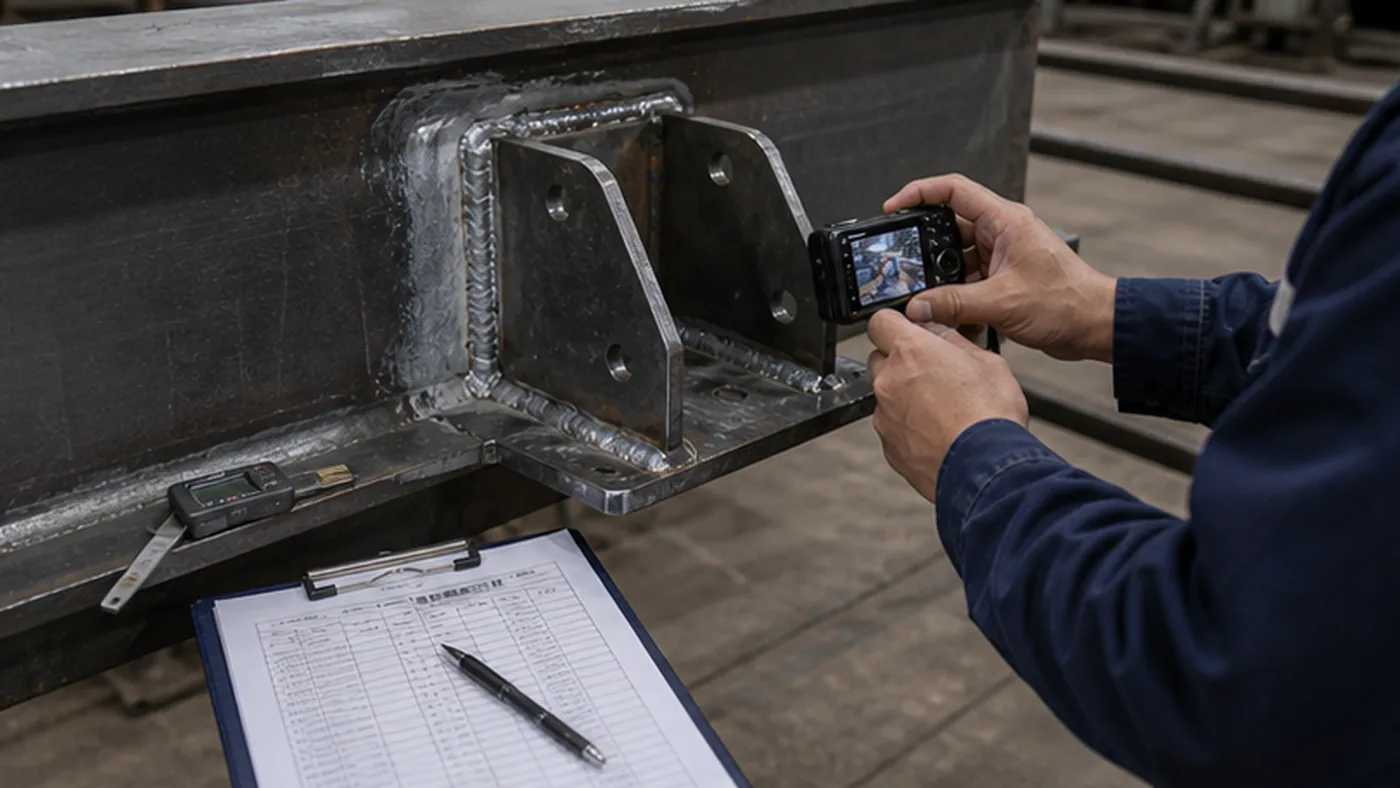
Steel structure repair photo record checklist: capture defect, component mark, repair steps, final inspection, coating repair, and release evidence.
Main question
What should EPC buyers check when using the steel structure repair photo record checklist?
Quick answer
Steel structure repair photo record checklist: capture defect, component mark, repair steps, final inspection, coating repair, and release evidence.
When to use this page
Use it before fabrication release, before shipment, or before final handover when missing records can delay acceptance.
What to verify
Capture the component identity first; Photograph the defect before repair; Record the repair method and approval context; Take photos during repair when evidence may be hidden
Related next step
A steel structure repair photo record checklist helps EPC teams prove that a defect was identified, controlled, repaired, inspected, and released correctly. Photos are often the simplest evidence, but they become weak if they do not show the component mark, defect location, repair steps, final condition, and approval context.
This guide is for EPC buyers, site quality engineers, inspectors, material controllers, and installation teams preparing repair evidence for NCR closeout, quality hold release, coating repair records, or final handover files.
1. Capture the component identity first
Every repair photo record should start by proving which steel item is being repaired. A close-up defect photo without a component mark is difficult to connect to the project records later.
| Photo item | What it should prove |
|---|---|
| Component mark | The repaired item can be matched to the mark list, drawing, package list, or erection area. |
| Package or shipment label | The issue can be connected to a delivery batch or site receiving record. |
| Drawing or grid reference | The repair location is traceable to the project area or installation sequence. |
| Overall component view | The close-up defect can be located on the full beam, column, brace, plate, or connection. |
For controlled repair approval, use the field repair approval checklist.
2. Photograph the defect before repair
Before-repair photos should show the original condition clearly enough for quality review. Take both overall and close-up photos.
- Overall view showing where the defect is on the component.
- Close-up view showing scratch, deformation, wrong hole, weld defect, coating damage, or missing part.
- Measurement photo when size, length, hole position, gap, or deformation amount matters.
- Lighting and angle that make the defect visible without hiding context.
- Photo of any temporary hold tag, quarantine mark, or issue label.
If the item is blocked from use, connect the record to the site quality hold checklist.
3. Record the repair method and approval context
Photos should not replace written approval. They should support the repair method, NCR, engineering note, or site instruction.
| Record item | Photo connection |
|---|---|
| Repair method | Photos should show that the actual work followed the approved method. |
| Engineering approval | Photos should identify the component and issue covered by the approval. |
| NCR or issue number | The photo file name or caption should reference the same closeout record. |
| Inspector involvement | Inspection point photos should match the hold point or release step. |
For NCR evidence, review the nonconformance report checklist.
4. Take photos during repair when evidence may be hidden
During-repair photos are important when the final condition will hide the work process. Without these photos, the project may only see the finished surface and not know whether the repair was done correctly.
- Surface preparation before coating or galvanizing repair.
- Weld repair preparation, gouging, cleaning, fit-up, or intermediate inspection.
- Hole correction, added plate, bracket repair, or connection modification before final coating.
- Use of approved repair material, welding consumable, paint, or zinc-rich compound.
- Inspector hold point before the next step covers the repaired area.
For coating-related records, use the coating inspection checklist.
5. Capture final repair condition
After-repair photos should show that the item is fit for the next decision: re-inspection, release with limitation, or release for installation.
| Final photo | Required evidence |
|---|---|
| Overall final view | The repaired area is visible in relation to the whole component. |
| Close-up final view | The defect has been repaired and no obvious open condition remains. |
| Measurement after repair | Dimensional or fit-up problem is corrected within the accepted tolerance. |
| Coating or galvanizing repair | Surface is repaired, coverage is complete, and inspection record is linked. |
| Release tag or status | The item status changed from hold or repair to the approved release state. |
6. Use consistent file names and captions
Repair photos should be easy to search months later. A consistent naming method helps teams connect photos to issue logs and handover files.
- Project or area code.
- Component mark or package number.
- Issue or NCR number.
- Photo stage: before, during, after, re-inspection, or release.
- Date and responsible inspector or team.
For issue tracking, use the site issue log template.
7. Link photo records to inspection and release
A repair photo record should support a final quality decision. The photos should be attached to the repair approval, NCR, inspection report, or release checklist.
- Attach photos to the same record number used in the site issue log.
- Include inspector comments when the photo alone does not explain the acceptance basis.
- Record whether repair is accepted, accepted with limitation, or rejected.
- Confirm if engineering approval is closed before installation release.
- Keep final release evidence with the quality document package.
Before the repaired item is installed, confirm release through the erection material release checklist.
8. Include repair photos in the turnover package
Repair photos may be needed during final acceptance, warranty discussion, or dispute review. The turnover package should include the complete record, not only selected final photos.
- Before-repair photos showing defect and identity.
- Repair approval or method statement.
- During-repair photos for hidden or controlled steps.
- After-repair photos and inspection results.
- Final release status and responsible signature.
For the broader document package, use the quality documents guide.
Red flags in repair photo records
- Photos show the defect but not the component mark or package reference.
- Only after-repair photos exist, with no record of the original defect.
- Repair work is hidden by coating before intermediate photos are taken.
- Photo names do not match the issue log, NCR, or inspection report.
- Final photos exist but no release decision is attached.
- Photos are stored in chat messages only and not included in the turnover package.
Buyer note
A steel structure repair photo record checklist makes field repair evidence useful instead of decorative. EPC buyers should require identity photos, defect photos, repair-stage photos, final condition photos, inspection records, and release evidence before closing a repair issue.
Buyer follow-up questions
How should buyers use this page?
Use it as a practical review aid for steel structure repair photo record checklist. The page helps the buyer confirm what must be checked, what evidence should be requested, and which follow-up actions should be closed before the package moves to the next procurement step.
When should this review happen?
Use it before shipment release, final document turnover, or owner handover when traceability and acceptance records need to be closed.
What evidence should be kept?
Keep the records that prove the decision, especially certificates, heat numbers, inspection records, NCR closure, coating reports, signatures, revisions, and final handover files. Photos, comments, approvals, open issues, and closeout notes should stay linked to the relevant drawing, supplier reply, shipment, or handover record.
How to use this checklist
Check this buyer-side checklist against the contract, approved drawings, owner requirements, engineer instructions, and the current edition of every project-specified standard. See the editorial and source review process.