Buyer-focused answer
Quick answer for buyers
Steel structure inspection comment closeout checklist: close buyer comments with repair evidence, re-inspection records, release status, and open item control.
Main question
What should EPC buyers check when using the steel structure inspection comment closeout checklist?
Quick answer
Steel structure inspection comment closeout checklist: close buyer comments with repair evidence, re-inspection records, release status, and open item control.
When to use this page
Use it before supplier shortlist approval or when quotations differ because each supplier used different assumptions.
What to verify
Build a single inspection comment register; Classify the comment before deciding closeout evidence; Confirm the supplier response answers the original comment; Attach repair and correction evidence
Related next step
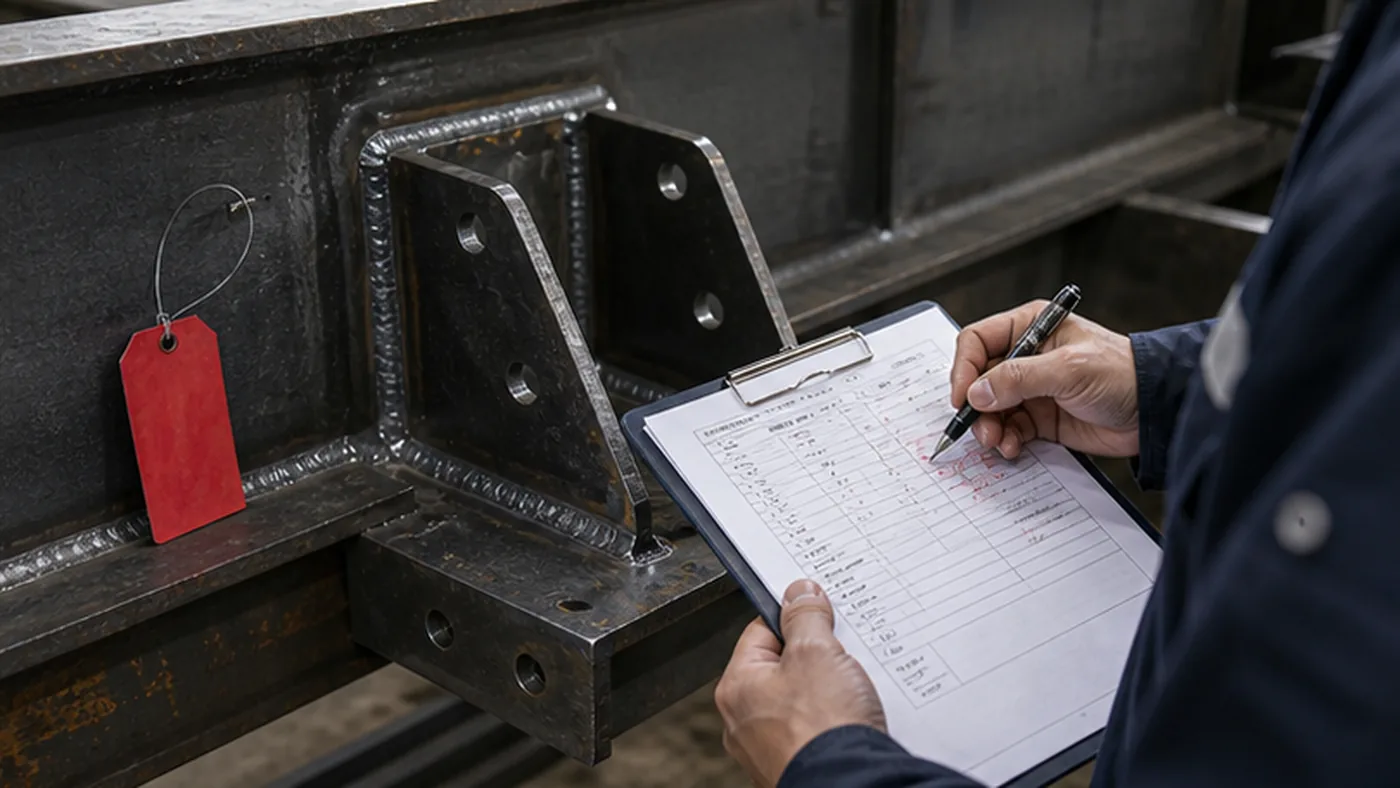
A steel structure inspection comment closeout checklist helps EPC buyers avoid a common problem: inspection comments are answered in emails, but the final evidence is not organized well enough for release, shipment, or project handover. A comment is not closed just because the supplier says the item was checked. It is closed when the affected item is identified, the response is accepted, repair or correction evidence is attached, re-inspection is recorded, and the release status is clear.
This checklist is useful after buyer inspection, third-party inspection, owner review, pre-shipment inspection, or site receiving inspection. It can also be used to compare supplier discipline after several batches or shipments.
1. Build a single inspection comment register
All comments should be kept in one register instead of scattered across email threads, marked photos, inspection reports, and messaging apps. The register should include comment number, inspection date, inspector, supplier contact, component mark, drawing revision, defect type, affected quantity, priority, due date, response status, and final closeout evidence.
When the same issue appears in more than one document, keep one master comment number and cross-reference the related report or photo. This reduces duplicate closeout work and prevents a serious finding from being hidden inside several minor comments.
2. Classify the comment before deciding closeout evidence
Different comments need different evidence. A missing signature, wrong document file name, weld defect, coating damage, dimension deviation, missing mark, or incomplete packing photo should not be closed with the same proof. Classification makes the closeout standard visible before the supplier replies.
| Comment type | Closeout evidence to request |
|---|---|
| Document correction | Corrected record, revision number, batch reference, issuer. |
| Fabrication deviation | Disposition, repair method if needed, re-measurement record. |
| Weld repair | Repair record, WPS reference, NDT or visual re-inspection result. |
| Coating damage | Repair area photos, DFT readings, curing or acceptance record. |
| Packing or marking | Corrected label photos, packing list update, affected bundle list. |
3. Confirm the supplier response answers the original comment
Before reviewing evidence, confirm that the supplier response actually answers the original comment. A reply that says "completed" may not identify what was completed. The response should reference the original comment number, component mark, batch, report, photo, and exact correction or disposition.
If the response changes the scope of the issue, the buyer should not close the original comment until the difference is clarified. For example, if the inspector raised coating damage on ten members but the supplier submits photos for six members, the remaining four must stay open.
Related resource: steel structure supplier inspection response checklist.
4. Attach repair and correction evidence
Closeout evidence should show the before condition, correction action, after condition, and acceptance result. For physical defects, photos should be labeled by component mark or bundle. For document comments, corrected files should show revision status and not only a replacement email attachment.
When evidence is unclear, keep the item open and request a corrected submission. Closing weak evidence may create site disputes later, especially if the component is packed, shipped, or mixed with other batches before the issue is resolved.
5. Require re-inspection or acceptance record
A repair photo alone may not be enough. If the original comment involved an acceptance requirement, the closeout file should include re-inspection or acceptance evidence. This may be a dimension check, weld inspection result, NDT report, coating DFT reading, galvanizing repair acceptance, label verification, or inspector sign-off.
The re-inspection record should cover the same quantity and scope as the original comment. If sampling is used, the buyer should approve the sampling basis before the comment is closed.
6. Link closeout to shipment or release status
Inspection comment closeout should be connected to a release decision. Each item should end as closed and released, closed with concession, transferred to site, rejected, or still open. The shipment release file should not leave important comments in an unclear status.
If an item is transferred to site, record who accepted the transfer, what work remains, what evidence travels with the shipment, and how the site team should verify final closeout. This prevents factory comments from becoming untracked site issues.
7. Track repeated comments and escalation
Repeated comments should not be treated as isolated closeout tasks. If the same inspection issue appears across several batches, record it as a trend and request corrective action. Repeated label errors, coating damage, incomplete documents, or repair evidence gaps often show a process problem rather than a one-time oversight.
Related resource: steel structure repeated NCR tracking checklist.
8. Use a closeout scorecard
A scorecard helps compare supplier closeout discipline after a project stage. The goal is not to create paperwork for its own sake. The goal is to see whether the supplier can close issues clearly enough for project release and owner review.
| Closeout item | Suggested weight | Evidence to check |
|---|---|---|
| Comment register control | 20% | Unique IDs, owner, due date, status, and evidence link. |
| Response relevance | 20% | Reply matches original comment scope and affected quantity. |
| Evidence quality | 25% | Photos, corrected records, repair logs, re-inspection results. |
| Release clarity | 20% | Closed, conditional, transferred, rejected, or open status. |
| Trend control | 15% | Repeated comments identified and escalated to corrective action. |
Warning signs
- Inspection comments are tracked only in email without a master register.
- Supplier responses do not reference component marks, report numbers, or affected quantity.
- Photos are submitted without labels or before/after sequence.
- Comments are marked closed without re-inspection or acceptance evidence.
- Shipment release is requested while important comments remain open.
- The same comment type repeats across batches without corrective action.
Buyer note
Inspection comment closeout is a release-control process. A clean closeout file protects both the buyer and the supplier because it shows what was found, what was corrected, what was accepted, and what remains open. For repeat orders, this closeout discipline is often more useful than a general supplier rating.
Buyer follow-up questions
How should buyers use this page?
Use it as a practical review aid for steel structure inspection comment closeout checklist. The page helps the buyer confirm what must be checked, what evidence should be requested, and which follow-up actions should be closed before the package moves to the next procurement step.
When should this review happen?
Use it after inspection comments are issued and before the related hold point, release, or closeout decision.
What evidence should be kept?
Keep the records that prove the decision, especially capacity evidence, quotation assumptions, audit findings, quality-document discipline, export packing experience, and schedule realism. Photos, comments, approvals, open issues, and closeout notes should stay linked to the relevant drawing, supplier reply, shipment, or handover record.
How to use this checklist
Check this buyer-side checklist against the contract, approved drawings, owner requirements, engineer instructions, and the current edition of every project-specified standard. See the editorial and source review process.