Buyer-focused answer
Quick answer for buyers
Steel structure NCR closeout evidence checklist: verify defect scope, approval, repair photos, inspection records, release status, and final signatures.
Main question
What should EPC buyers check when using the steel structure NCR closeout evidence checklist?
Quick answer
Steel structure NCR closeout evidence checklist: verify defect scope, approval, repair photos, inspection records, release status, and final signatures.
When to use this page
Use it before fabrication release, before shipment, or before final handover when missing records can delay acceptance.
What to verify
Confirm NCR identity and affected scope; Attach defect evidence before disposition; Confirm disposition and approval authority; Verify repair or corrective action evidence
Related next step
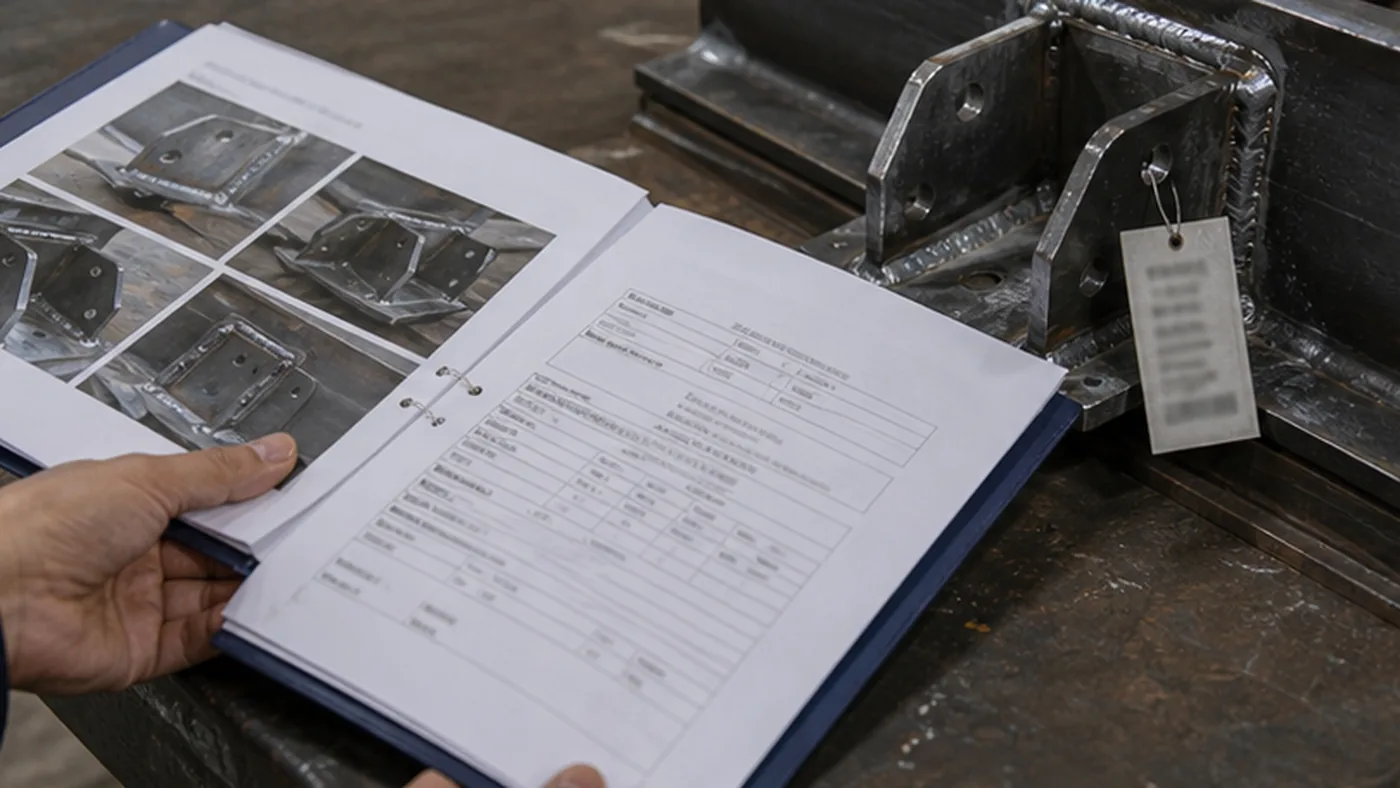
A steel structure NCR closeout evidence checklist helps EPC teams confirm that a nonconforming item is not closed without proof. NCR closeout should show what was wrong, which component was affected, what decision was approved, what action was completed, how the result was inspected, and whether the item is released for installation or shipment.
This page is written for EPC buyers, project quality engineers, inspectors, document controllers, and site teams reviewing steel structure NCR records during fabrication, delivery, repair, or handover.
1. Confirm NCR identity and affected scope
The closeout evidence should identify exactly which item, batch, drawing, and quality requirement are involved. A generic NCR title is not enough.
| NCR identity item | Evidence to check |
|---|---|
| NCR number | Unique reference used consistently in issue log, photo records, repair records, and release files. |
| Component identity | Component mark, package number, heat number if relevant, and drawing reference. |
| Affected scope | Single item, repeated defect, shipment batch, coating area, weld group, or connection type. |
| Requirement violated | Drawing, specification, inspection plan, contract requirement, or approved procedure. |
For a broader NCR structure, use the steel structure nonconformance report checklist.
2. Attach defect evidence before disposition
Before the NCR is corrected or accepted, the original condition should be documented. This prevents disputes about the real defect and the repair scope.
- Defect photos showing component mark and location.
- Measurement records for dimensional, hole, fit-up, deformation, or coating thickness issues.
- Inspection report, receiving report, test result, or witness note that found the issue.
- Drawing or specification reference showing the acceptance gap.
- Temporary quality hold or material control status if the item was blocked from use.
For photo evidence requirements, review the repair photo record checklist.
3. Confirm disposition and approval authority
Every NCR should have a disposition decision. The decision should be approved by the correct person before the closeout record is accepted.
| Disposition | Evidence required |
|---|---|
| Repair | Approved repair method, responsible party, inspection requirement, and acceptance criteria. |
| Rework or replacement | Rework instruction, replacement record, material control update, and final inspection. |
| Use as is | Engineering or project approval, limitation, risk acceptance, and affected scope. |
| Reject | Rejected item status, segregation record, replacement plan, or supplier corrective action. |
For field repair decisions, use the field repair approval checklist.
4. Verify repair or corrective action evidence
The NCR closeout should prove that the approved action was completed. Evidence should match the disposition, not simply say "repaired."
- Repair method or corrective action instruction.
- Before, during, and after photos for repair work.
- Welding repair record, NDT result, coating repair record, DFT result, or dimensional re-check where required.
- Replacement material, bolt, accessory, or component record if replacement was chosen.
- Inspector confirmation that the approved action was completed.
For repair completion evidence, use the repair closeout checklist.
5. Close quality hold and material control status
An NCR can be technically closed but still create site confusion if material control records are not updated. The evidence package should show the final status.
| Status record | Closeout evidence |
|---|---|
| Quality hold | Hold is released, changed to limited release, or remains open with reason and owner. |
| Material control | Item location, release status, quarantine status, or replacement status is updated. |
| Installation release | Item is released for installation or blocked from installation by another open issue. |
| Document control | NCR closeout file is included in the quality package and handover record. |
If the NCR created a hold, review the site quality hold checklist.
6. Check final inspection and acceptance signatures
Closeout evidence should include the required inspection and acceptance signatures. Missing signatures make the closeout weak even when the repair looks complete.
- Inspector signature or approval note after corrective action.
- Engineering approval for structural modification, repair acceptance, or use-as-is decision.
- Supplier or fabricator response when the defect originated before shipment.
- EPC quality or project representative acceptance if required by the contract.
- Date of closeout and name of person changing the final NCR status.
7. Include closeout evidence in the final quality package
NCR evidence should not remain only in email, chat messages, or separate photo folders. It should be easy to retrieve during handover, warranty discussion, or claim review.
- NCR form and disposition decision.
- Defect photos, measurements, and inspection records.
- Repair method, corrective action record, and re-inspection result.
- Final release status and signatures.
- Related drawing, specification, material certificate, or coating document where required.
For complete documentation, use the quality documents guide.
8. Review repeated NCR patterns
Closeout should also confirm whether the issue is isolated or repeated. Repeated NCRs may require broader corrective action, not only item-by-item closure.
- Same defect appears on multiple components or packages.
- Same drawing, welding, coating, marking, or packing issue repeats.
- Supplier corrective action is needed before the next shipment.
- Inspection plan or receiving checklist needs adjustment.
- Open risks are transferred to the project issue log with owner and due date.
Red flags in NCR closeout evidence
- NCR is closed without showing the original defect condition.
- Repair evidence is attached but the repair method was never approved.
- Use-as-is decision has no engineering or project acceptance.
- Quality hold remains open after the NCR is marked closed.
- Re-inspection records are missing after repair or rework.
- Evidence files are not included in the final quality package.
Scope boundary: close the NCR record and its disposition
This checklist follows the nonconformance from defect identification through approved disposition, material control, corrective work, inspection, and closure. A repair closeout package may be one input, but the NCR must preserve who accepted the disposition and how holds or concessions were resolved.
- Keep the original requirement, actual nonconformance, quantity, and component identity visible.
- Link disposition approval, execution evidence, verification, and signatures.
- Do not close while material is uncontrolled or disposition authority is ambiguous.
Buyer note
A steel structure NCR closeout evidence checklist protects EPC buyers from closing nonconformances too early. The record should connect the original defect, approved disposition, corrective action, inspection evidence, quality hold release, and final acceptance in one traceable package.
Buyer follow-up questions
How should buyers use this page?
Use it as a practical review aid for steel structure ncr closeout evidence checklist. The page helps the buyer confirm what must be checked, what evidence should be requested, and which follow-up actions should be closed before the package moves to the next procurement step.
When should this review happen?
Use it before shipment release, final document turnover, or owner handover when traceability and acceptance records need to be closed.
What evidence should be kept?
Keep the records that prove the decision, especially certificates, heat numbers, inspection records, NCR closure, coating reports, signatures, revisions, and final handover files. Photos, comments, approvals, open issues, and closeout notes should stay linked to the relevant drawing, supplier reply, shipment, or handover record.
How to use this checklist
Check this buyer-side checklist against the contract, approved drawings, owner requirements, engineer instructions, and the current edition of every project-specified standard. See the editorial and source review process.