Buyer-focused answer
Quick answer for buyers
Steel structure galvanizing inspection checklist for export projects: coating thickness, appearance, vent holes, repairs, labels, photos, and packing evidence.
Main question
What should EPC buyers check when using the steel structure galvanizing inspection checklist for export projects?
Quick answer
Steel structure galvanizing inspection checklist for export projects: coating thickness, appearance, vent holes, repairs, labels, photos, and packing evidence.
When to use this page
Use it before fabrication release, before shipment, or before final handover when missing records can delay acceptance.
What to verify
Confirm the galvanizing specification; Check design details before galvanizing; Review surface condition before galvanizing; Measure coating thickness
Related next step
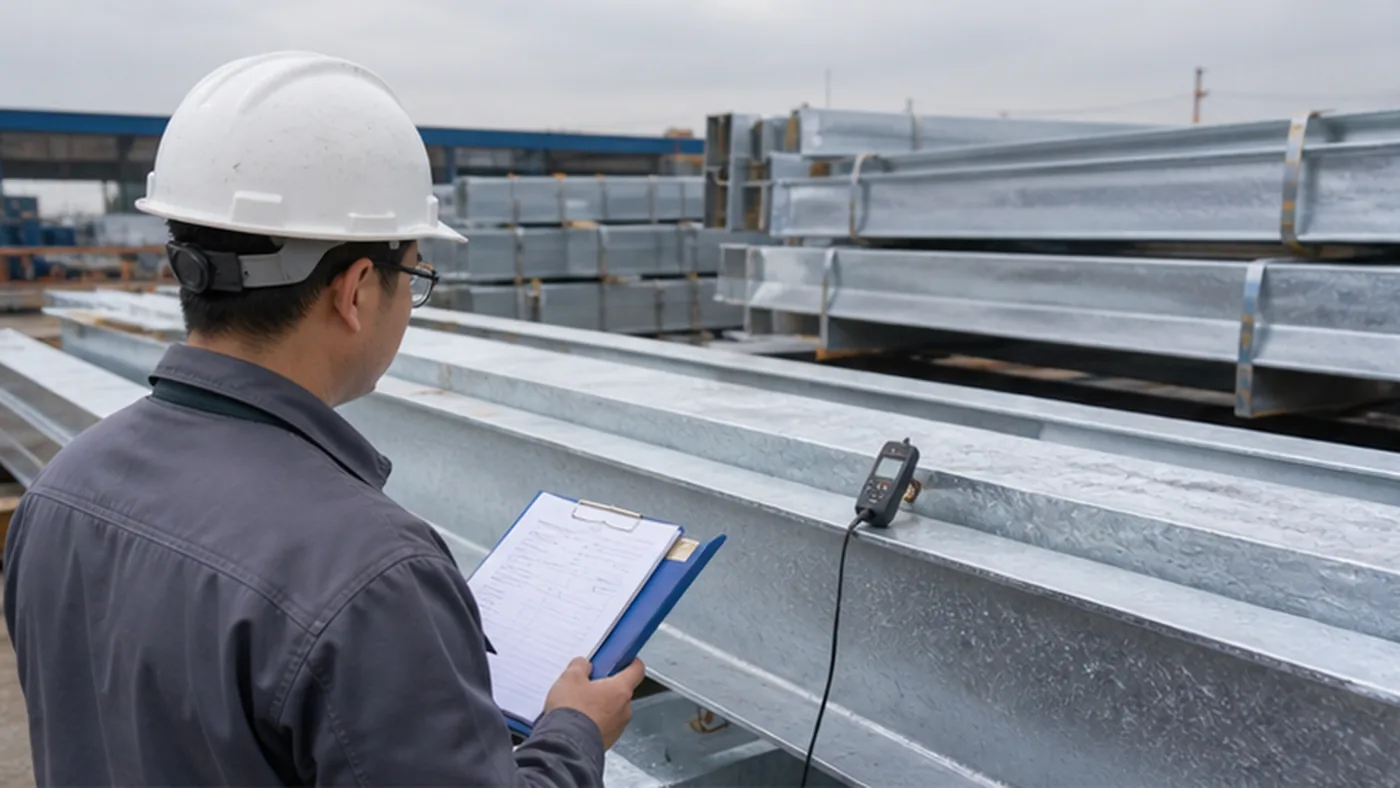
A steel structure galvanizing inspection checklist for export projects helps EPC buyers confirm that hot-dip galvanized components are acceptable before loading. Galvanizing problems are often found too late: blocked holes, missing marks, rough zinc build-up, thin coating, distorted parts, or poor repair evidence may only become visible when the site team starts sorting steel members.
The purpose of this checklist is not to replace the project standard. It helps procurement teams ask for the right records and photos before approving shipment, especially when the buyer cannot visit the factory or galvanizing plant in person.
1. Confirm the galvanizing specification
Before inspection starts, the buyer should confirm which standard, coating thickness, appearance requirement, and repair method apply to the project. If the RFQ only says "hot-dip galvanized," suppliers may quote different acceptance levels and different repair practices.
- Applicable galvanizing standard and project specification.
- Minimum coating thickness or mass requirement.
- Component list or drawing numbers included in the galvanizing scope.
- Allowed repair material and maximum repair area.
- Any special requirement for threaded parts, bolts, gratings, handrails, or exposed architectural steel.
2. Check design details before galvanizing
Some galvanizing defects come from fabrication or detailing, not from the zinc bath itself. Closed sections, poor drainage, tight overlapping plates, and unvented hollow members can create safety risks and quality problems during hot-dip galvanizing.
| Item | Buyer check |
|---|---|
| Vent and drain holes | Confirm holes are shown, correctly located, and not blocked after fabrication. |
| Closed hollow sections | Check that no sealed cavity enters the galvanizing bath. |
| Long or thin members | Ask how distortion risk will be controlled during lifting and dipping. |
| Overlapping plates | Confirm gaps or weld sealing meet the galvanizing plant's requirement. |
3. Review surface condition before galvanizing
Good galvanizing starts before the steel reaches the kettle. Oil, paint, heavy weld spatter, slag, labels, and closed weld defects can affect zinc adhesion and surface quality. Ask for pre-galvanizing photos when the package includes complex welded assemblies.
- Weld slag, spatter, sharp burrs, and temporary attachments removed.
- Grease, paint, marker, and adhesive residue cleaned.
- Drainage paths clear and visible.
- Component marks transferred to a method that remains readable after galvanizing.
For wider coating preparation requirements, compare this item with the surface treatment requirements for export steel structures.
4. Measure coating thickness
The inspection report should show where coating thickness was measured, which gauge was used, and whether readings meet the specified standard. A report with only one average number is weak evidence for a mixed shipment of beams, columns, bracing, plates, and accessories.
- Record readings by component type, mark range, or batch.
- Include minimum, maximum, and average values where practical.
- Calibrate or verify the gauge before measurement.
- Record nonconforming areas and repair actions separately.
5. Inspect appearance and usability
Appearance inspection should focus on function and acceptance risk. EPC buyers should not reject every cosmetic variation, but the supplier should identify defects that affect corrosion protection, assembly, safety, or owner approval.
| Defect or concern | Why it matters |
|---|---|
| Bare spots or black areas | May indicate unprotected steel and require approved repair. |
| Heavy runs, sharp zinc spikes, or rough edges | Can affect handling, bolting, fit-up, or site safety. |
| Blocked bolt holes or slots | Can delay site installation and require rework. |
| Distortion or twist | May prevent correct alignment during erection. |
| Unreadable marks | Creates sorting and installation risk after delivery. |
6. Control repair and touch-up evidence
Repair areas should be documented instead of hidden inside general photos. Ask the supplier to record the location, size, repair material, surface cleaning method, and final appearance. Repair evidence is especially important for edges, lifting damage, drilled holes, and areas modified after galvanizing.
If the project also uses painted components, keep the repair logic consistent with the steel structure coating inspection checklist.
7. Verify marking after galvanizing
Component marks must remain readable after galvanizing, packing, and transport. The inspection should confirm that piece marks, bundle numbers, and packing references match the shipping list and erection drawings.
- Marks are readable after galvanizing and before packing.
- Bundle tags match the packing list and component list.
- Small galvanized parts are bagged, boxed, or tagged by installation area.
- Photo records show marks on representative members.
8. Check export packing after galvanizing
Fresh galvanized steel can still be damaged by poor bundling, trapped moisture, and careless loading. Packing should prevent unnecessary abrasion, protect threads and loose parts, and allow the receiving team to identify each package quickly.
- Use spacers or timber where metal-to-metal contact may damage surfaces.
- Protect threaded ends, anchor bolts, and small galvanized accessories.
- Avoid water traps inside bundles where wet storage staining can develop.
- Take loading photos that show package numbers and container positions.
For shipment control, use the export packing checklist and the container loading checklist.
9. Request a clear document package
The final release file should include the galvanizing report, thickness readings, repair records, photos before packing, packing list, and shipment release confirmation. These records should connect component marks to the actual shipment, not remain as a generic quality statement.
Use this article together with the steel structure quality document checklist and the pre-shipment inspection document checklist.
Buyer note
Galvanizing inspection is easier to manage when requirements are written before award. A clear checklist helps EPC buyers compare suppliers, avoid vague coating promises, and reduce installation delays caused by blocked holes, missing marks, or incomplete repair evidence.
Buyer follow-up questions
How should buyers use this page?
Use it as a practical review aid for steel structure galvanizing inspection checklist for export projects. The page helps the buyer confirm what must be checked, what evidence should be requested, and which follow-up actions should be closed before the package moves to the next procurement step.
When should this review happen?
Use it before shipment release, final document turnover, or owner handover when traceability and acceptance records need to be closed.
What evidence should be kept?
Keep the records that prove the decision, especially certificates, heat numbers, inspection records, NCR closure, coating reports, signatures, revisions, and final handover files. Photos, comments, approvals, open issues, and closeout notes should stay linked to the relevant drawing, supplier reply, shipment, or handover record.
How to use this checklist
Check this buyer-side checklist against the contract, approved drawings, owner requirements, engineer instructions, and the current edition of every project-specified standard. See the editorial and source review process.